Ireland driving rules tourists Should know: the do’s and don’ts
Ireland Travel Planning uses affiliate links, including Amazon Associates. If you buy through these links, I may earn a small commission at no extra cost to you. I use a mix of my own photos and paid stock images across the site. (Disclosure Policy)
Driving in Ireland seems to be the thing that scares or overwhelms most first-time visitors. And honestly, I get it, the Irish roads can be quite daunting to get your head around.
We have quite fast speed limits, winding layouts and routes that tend to be a little bit on the narrow side.
However, as your trusted local guide I want put your mind at ease, with this do’s and don’ts guide to driving in Ireland.
The best way to overcome the ‘nervous’ elements to Irish roads is to be prepared!
And besides, having access to a car in Ireland can really take your trip to the next level. Just picture the incredible hidden gems and unspoiled landscapes that are in your future.
QUICK TIPS for IRELAND
AVOID HIGH ROAMING CHARGES
Airalo eSIMs work seamlessly across Ireland with quick, affordable data plans. Use code IRELAND10 for 10% off your plan (ROI Deals & ROI & NI Plans)
AIRPORT TRANSFER MADE EASY
Welcome Pickups is my go-to for reliable rides from the airport straight to your accommodation. I'd advise booking in advance for peace of mind.
DISCOVER UNIQUE activities
Check out GetYourGuide & Viator for unique things to do, like a DIY Claddagh Ring Workshop or a street food walking tour with a local.
DON’T SKIP INSURANCE!!
I can't stress this enough, but travel insurance is an absolute must! Thankfully, VisitorsCoverage is great for comparing affordable, trusted insurance plans to find one that actually suits your needs.
AVOID OVERPAYING FOR CAR RENTALS
Before booking your rental, I'd advise checking out comparison tools like DiscoverCars to ensure you're getting the best deal on the market.
NEED A LAST MINUTE PACKING FIX?
You'd be surprised how many visitors regret not packing waterproof trousers (like these) or a universal travel adapter (like this). That's why I created this Amazon essentials list for those last minute packing needs.
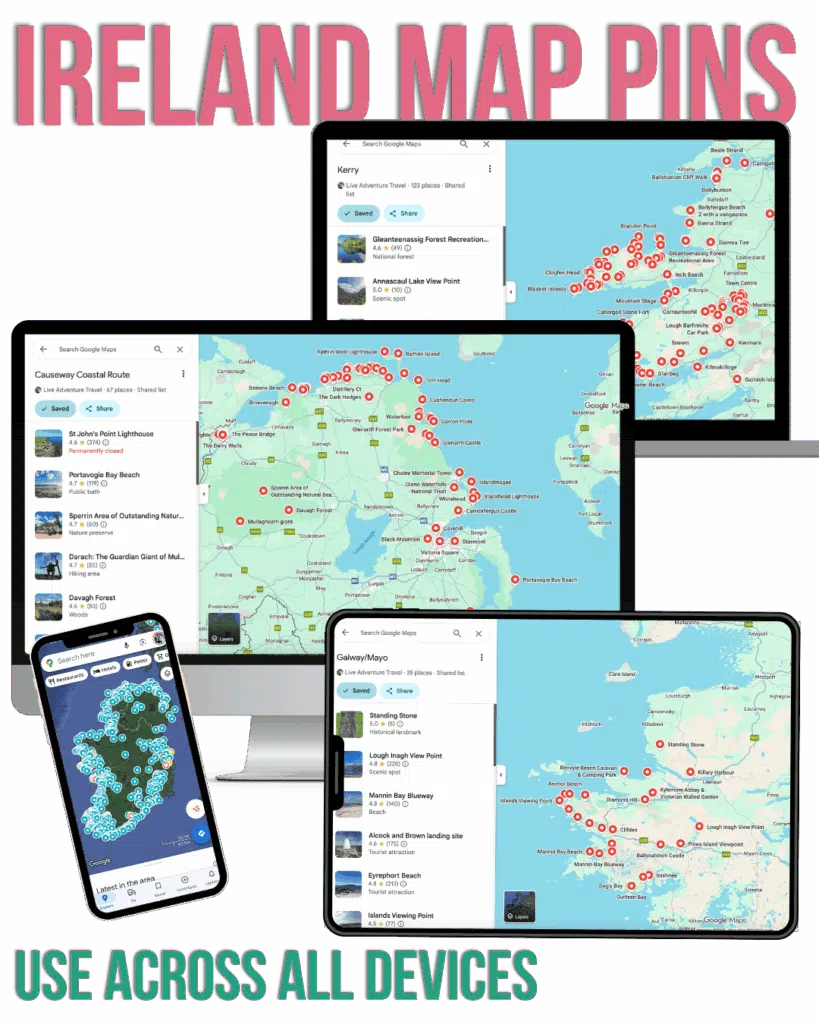
Avoid only visiting the same generic locations seen in every Ireland Travel guide…
Instead, spice up your itinerary with local hidden gems, lesser-known spots, and pull-ins that most drive past.
Sign up below for free access to my hand-picked Google Map Pins.
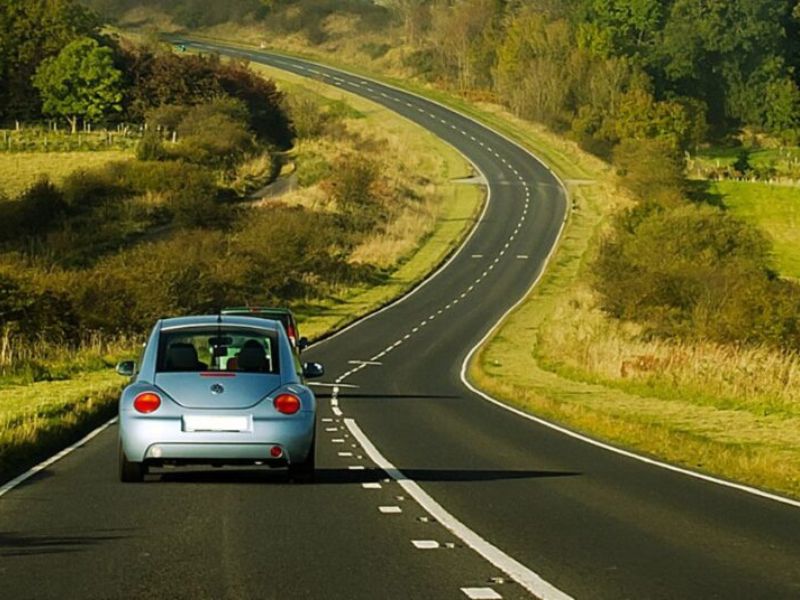
1. Do: Drive on the Left
Driving on the left hand side of the road can feel confusing for over 70% of the worlds population but promise with little bit of practice it will feel natural!
And after an hour or so of driving you’ll be surprised at how easily your mind adjusts.
If you're still deciding between a manual and an automatic rental, I'd honestly lean towards an automatic if it's within your budget.
You'll already be adjusting to driving on the left, unfamiliar roads and roundabouts, so removing the gear changes makes those first few hours much less stressful.
I usually compare the price difference on Discover Cars before booking because sometimes the upgrade costs less than you'd expect.
In Ireland, we typically have many reminders on our roads that reinforce the idea of driving on the left, for example, there will be signs when entering motorways, using traffic lights as a pedestrian and generally speaking, there will be stickers on the windscreen of rental cars.
The main thing to remember is to stay calm and focused, especially when pulling out onto main roads.
Drive in Ireland
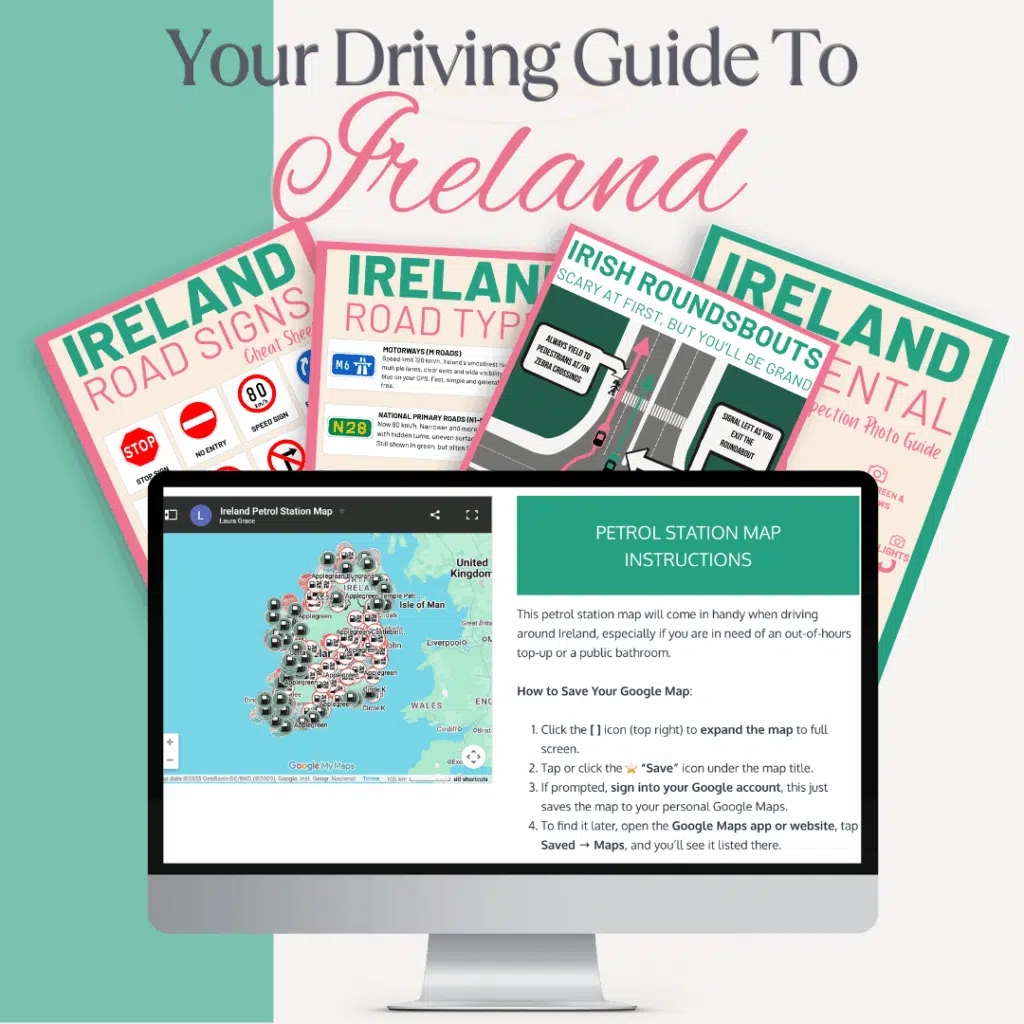
Feeling nervous about driving in Ireland? You’re not the only one… and you don’t have to figure it out alone.
The Ireland Driving Toolkit is a practical guide with clear local advice and no guesswork.
✔️ Custom Google Maps with petrol stations and toll roads mapped out.
✔️ Cheat sheets for roundabouts, road signs and km to miles.
✔️ Straightforward tips on tolls, navigation and what to expect on different road types.
Plus, the small local details most guides skip, but make all the difference once you’re here.
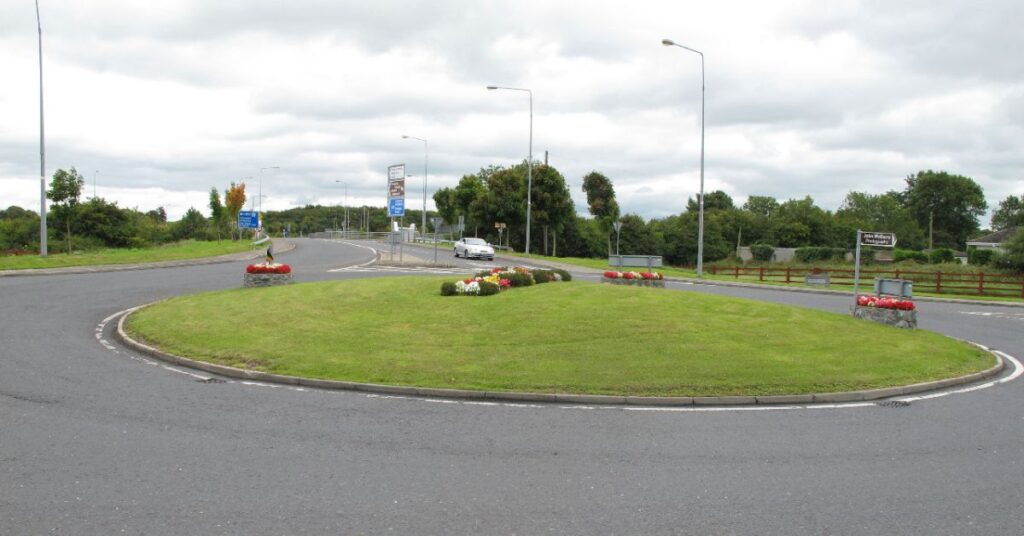
2. Don’t: Forget About Roundabouts
Ok, I have a little bit of sad news, but in Ireland roundabouts are EVERYWHERE! So, this is something to be mindful of, especially if driving on the left is something that is foreign to you.
Knowing how to navigate them is essential for a smooth driving experience and I am going to give you a quick run down here.
When approaching a roundabout, always remember to yield to traffic already on the roundabout, which will be coming from your right. Basically, the person on the right always has the the ‘right of way’.
A common mistake to avoid is failing to use turn signals correctly. When taking the first exit, signal left as you approach.
If you're going straight or taking any other exit, signal left as you pass the exit before the one you plan to take.
This helps keep the flow of traffic smooth and ensures other drivers know your intentions.
When dealing with roundabouts that have two lanes, be mindful of which lane you’re in.
Generally, the left lane is for taking the first or second exits, while the right lane is for the third exit or going full circle.
If you're unsure, check the road markings, as they'll often indicate the correct lane for your intended exit.
In Ireland, we called the signal light an ‘indicator’. I’m not fully sure what it is called in other parts of the world, I have heard it be referred to as a ‘blinker’ while in the US.
PLANNING ON RENTING A CAR IN IRELAND?
I highly recommend keeping an eye on the rental prices ahead of time by using comparison tools like Discover Cars to find the best prices on the market.
3. Do: Watch Out for Narrow, Rural Roads
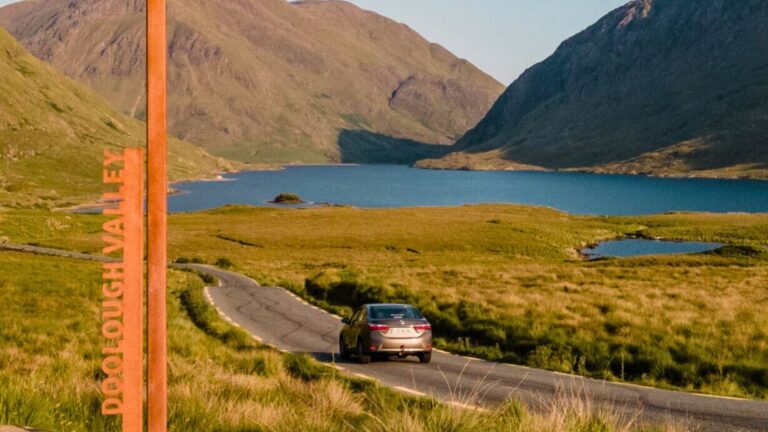
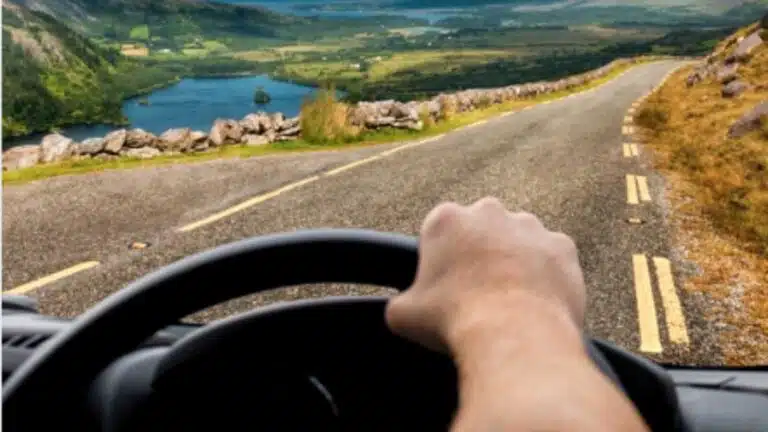
The first thing I want to mention about Ireland’s iconic narrow country roads is…try avoid them if you can.
The thing is, Google Maps likes send you down them, despite there actually being a more direct and less rural route.
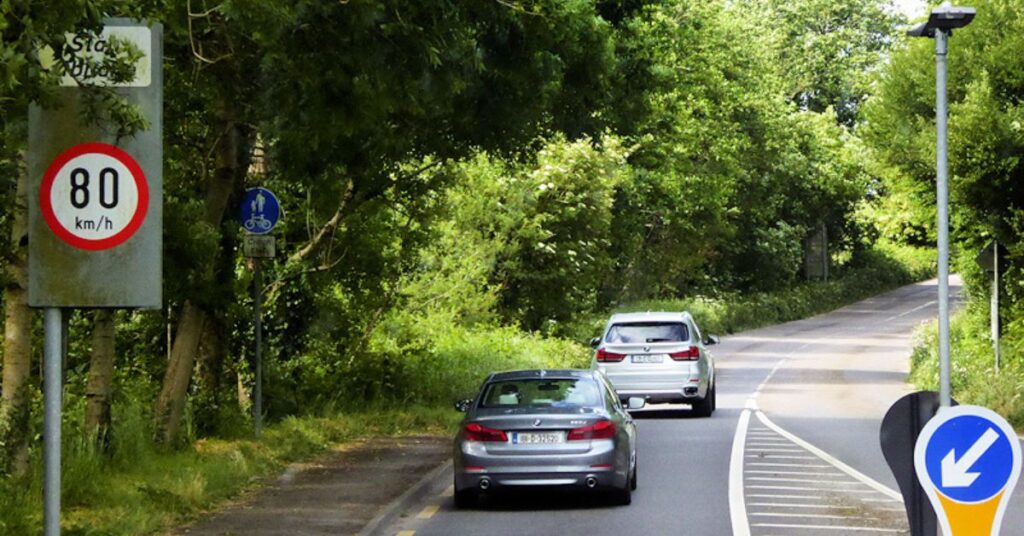
I think it’s because the speed limit on these roads tend to be 80 km/h (50 mph), so from GPS standpoint, yes, it is technically quicker.
But…the reality is…no one in their right mind is driving on road with grass in the middle that looks like it should be a one way system at 80 km/h.
Unless, you happen to meet ‘Bob’ from around the corner who has been driving the same route since he was 16…
So, the moral of this point is scan the GPS options to see if there are anymore direct routes to choose from.
If you do find yourself on one of these roads keep your speed low, even if the posted speed limit allows for faster travel.
And if you find yourself in front of a local, pull into passing areas to allow them to pass you by.
It’s better to drive safely than under pressure!
This is exactly why I usually suggest comparing car sizes before booking rather than automatically choosing the biggest option. When I'm looking at rentals, I normally use Discover Cars because it's easy to see what's available across different companies without checking each one individually.
DISCOVER Your ideal
4. Don’t: Ignore Speed Limits
Speed limits in Ireland can feel like a bit of a mixed bag, especially if you're bouncing between towns, countryside, and motorways (highways).
One minute you’re cruising along at 100 km/h on a national road, and the next, you’re slowing down to 50 km/h as you roll into a tiny village with one pub and a post office.
In urban areas and town centers, speed limits are typically 50 km/h (about 30 mph). Once you’re out in the rural stretches, the limits jump to 80 km/h (50 mph) or 100 km/h (62 mph). And highways or motorways let you push up to 120 km/h (75 mph).

But the thing is, speed signs aren’t always obvious, especially in more rural or scenic areas where the last thing you’re thinking about is a speed limit sign tucked behind a hedge. Luckily, google maps is getting better at displaying the limit as you drive, but not always, so this something to be mindful of.
When it’s comes to enforcement, speed camera’s a quite common in Ireland and they come in a few different types of forms.
First, is the Gardaí, Ireland’s police force. They’ll typically get you with speed gun, they’ll sit themselves somewhere not so obvious monitoring the speed of passing vehicles. As far as I am aware, they have to actually pull you over in order for you to get a ticket but I’m not 100% certain on this.
Then we have mobile speed vans that are usually parked up on the side of a road, these are really easy to spot with reflective yellow pattern on the outside and a big camera graphic but sometimes (particularly on fast roads) you’ve have passed them by before having time to react. This of course is only an issue if you choose to speed, which for obvious reasons I advise against.
In recent years, they have introduced average speed cameras, again there is plenty of warning before you approach them. They are located on a big yellow post and track your average speed between one junction to another.
If you get caught speeding, you will be issued a fine and 3 penalty points. The points for international visitors will only affect you when driving in Ireland.
Avoid only visiting the same generic locations seen in every Ireland Travel guide…
Instead, spice up your itinerary with local hidden gems, lesser-known spots, and pull-ins that most drive past.
Sign up below for free access to my hand-picked Google Map Pins.
5. Do: Familiarise Yourself with Road Signs
Ireland has its fair share of quirky and unique road signs that might leave you scratching your head if you're not prepared.
While some signs will look familiar, like speed limits and stop signs, there are a few that are distinctly Irish, literally.
One of the first things you’ll notice is that many signs are in both English and Irish (Gaeilge). So, if you see something that says “Go Mall” (probably the most commonly placed sign in the Irish Language) that’s just means ‘go slow’.
In rural areas, keep an eye out for signs warning of things like sheep crossings or winding roads.
You'll also find directional signs that give distances in kilometers, so if you're used to miles, it's good to have a rough conversion in your head.
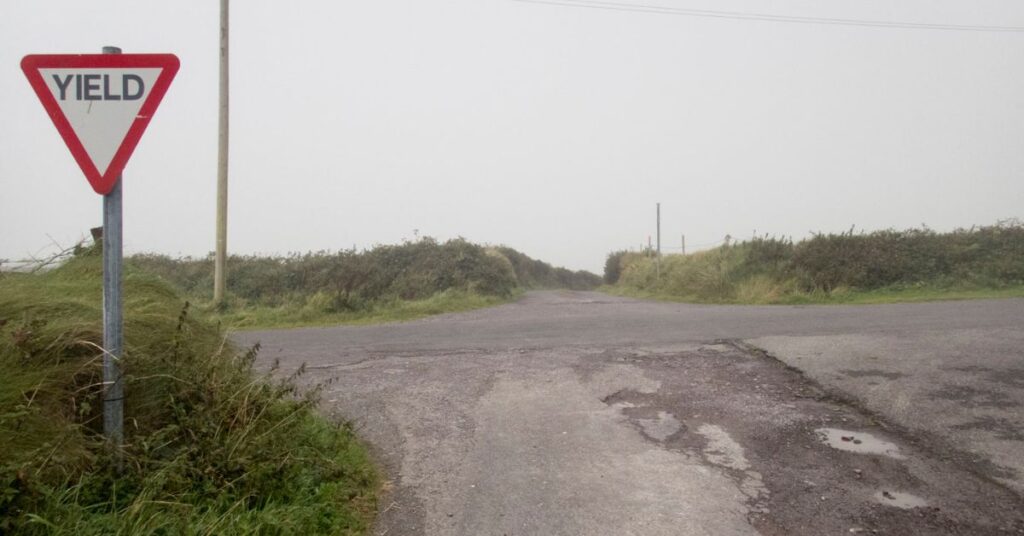
Another important one is the “Yield” sign, which is equivalent to a “Give Way” sign in other countries, and the “No Overtaking” sign, a red circle with a line going through it and two black cars. This is crucial on narrow roads where overtaking can be dangerous.
And let's not forget the “Slippery Road” sign, which looks like a car skidding. If you’re driving during one of Ireland's famous rain showers, you'll understand why this sign is so common, wet, winding roads can become hazardous quickly.
6. Don’t: Assume Petrol Stations are Open 24/7
There has been a number of times where I have left it a little too late to fill up my tank only to find out that all the near by stations closed at 9pm. Please don’t make the same mistakes as me! 🤣
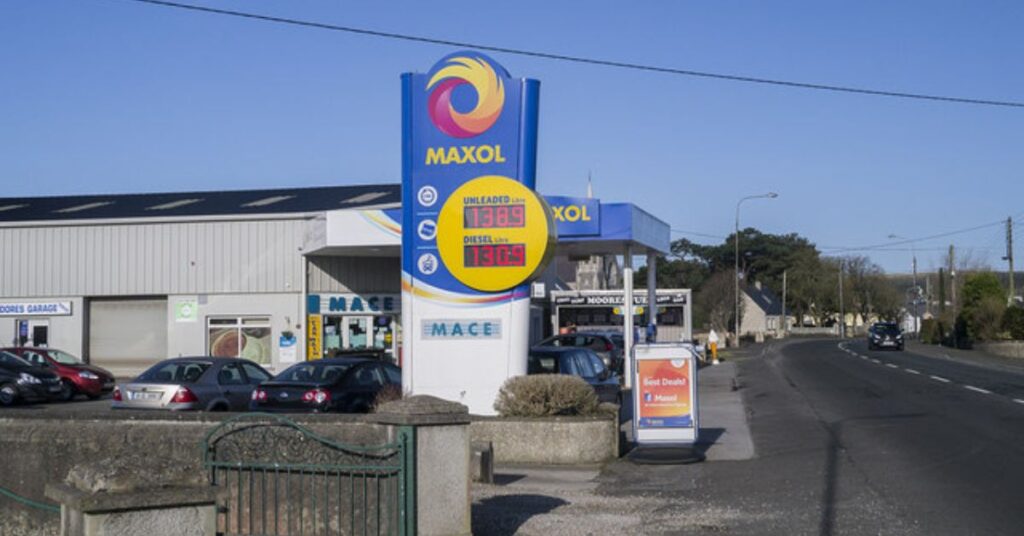
Particularly, in more rural area’s it is common for petrol stations or service stations to close sometime in the late evening.
In cities or on Motorways you will find 24 hour stations but other than that you will have to really search for one.
As for fuel types, Irish stations typically offer both petrol (gasoline) and diesel. Make sure you know which one your rental car needs, mixing them up can lead to a whole lot of hassle (and a hefty bill).
Also, it’s important to note that all service stations in Ireland are self service, typically, you pump the petrol or diesel yourself and then tell the shop assistant which pump your car is parked at so that they can issue the payment.
Recently, some stations have introduced card payments at the actual pump itself, in these cases there are usually instructions that you can follow.
It's also worth checking the fuel policy before you collect your car. Most rental companies expect you to return it with a full tank, but it's always something I double-check when comparing rentals on Discover Cars.
7. Do: Be Patient and Polite on the Road
If there’s one thing that will make your driving experience in Ireland a whole lot smoother, it’s mastering the art of patience and politeness. The pace of life here can be a little slower, especially on the roads, so it’s best to embrace it.
Whether you're stuck behind a tractor on a narrow rural road or navigating through town traffic, a little courtesy goes a long way.
In rural areas, you're bound to come across farm vehicles like tractors or even a herd of sheep (yes, it happens!). The rule of thumb? Slow down, give them plenty of space, and resist the urge to beep your horn or rush.
Tractors might pull over to let you pass, but only if there's a safe spot, in Ireland a fully acceptable excuse for being late is due to being stuck behind a tractor 😉
We also have a lot of driving constoms, for example flashing lights this often means someone is letting you know you’re clear to go, or they’re warning you about something ahead (like a speed trap or obstacle) or they want to say thank for letting them pass.
If a drover behind you allows you into a lane, or make a turn on a busy junction you can thank them by waving up to the review mirror or pressing the hazard lights are a second or two,
Speaking of local customs, don’t be surprised if you get a wave from someone you never met before while passing each other by in a car.
Generally speaking, lifting one or two fingers off the wheel is a way to acknowledge a complete stranger, lifting all 4 fingers off the wheel is a way of acknowledging someone you vaguely know and full wave is a way of saying hi to a neighbour or friend. However, you could get all of the above despite never actually meeting the passer by before.
Sometimes as a way of saying thanks or just a simple hi.
NEED A LAST-MINUTE PACKING FIX?
You'd be surprised how many visitors regret not packing waterproof trousers (like these) or a universal travel adapter (like this). That's why I created this Amazon essentials list for those last-minute packing needs.
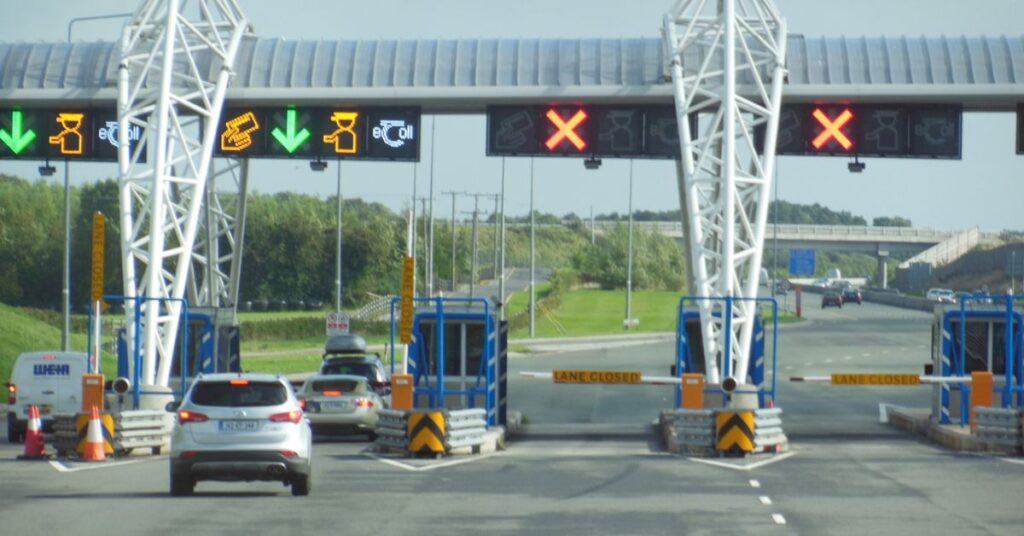
8. Don’t: Panic at Toll Roads
In my Ireland Travel Planning Facebook Group I have a lot of people ask about toll roads in Ireland, and if I’m being honest, there are more than I wish there were!
But…there is no reason to panic about them because they are generally quite easy to use.
When it comes to paying, you have a couple of options. Many tolls have electronic payment systems, so if you’ve got an electronic tag in your rental car if that’s a service the company offers and then you’re all set as everything is automated!
If you choose to go down the DIY route, then card payments are your best option however, some booths do still take cash. This will be well signposted as you approach the bridge.
The m50 toll in Dublin, is pretty much the only confusing one in my opinion. It’s quite literally a big scanner in the sky and if you don’t pay within 24 hours the fee will increase. You can arrange a deal for this with you rental company or you can pay online once you pass it.
My best advise is to familiarise yourself with it’s location to avoid any accidental charges.
🚨 DON'T SKIP INSURANCE: I can't stress this enough, but travel insurance is an absolute must! Thankfully, VisitorCoverage is a great tool when comparing affordable plan options.
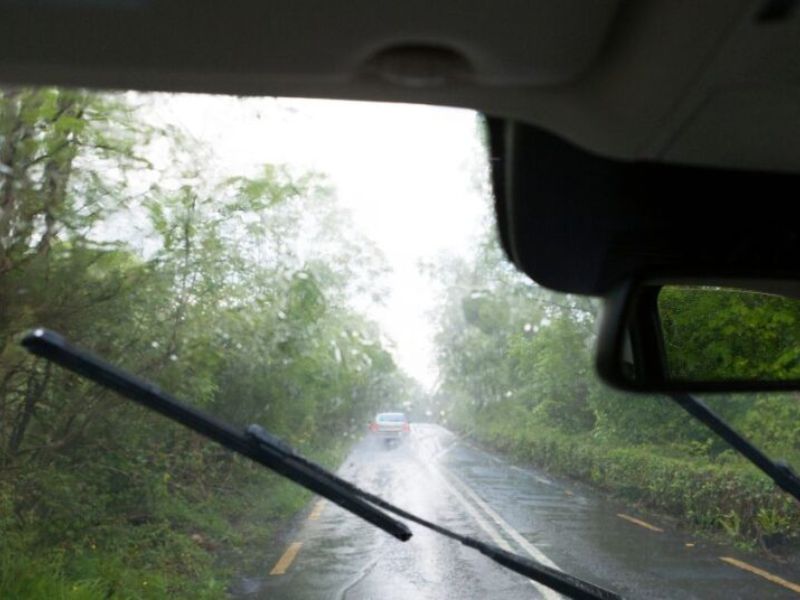
9. Do: Prepare for Changing Weather
Ah, the weather in Ireland, unpredictable is an understatement! One moment you could be basking in sunshine, and the next, a downpour is on its way. This can seriously impact your driving, so it’s essential to be prepared.
When you hit the road, especially in fog or rain, take it slow and increase your distance from the car in front of you.
If you’re driving in heavy rain, be aware of hydroplaning; reduce your speed and avoid sudden movements. And let’s not forget about icy roads during those rare cold snaps, drive extra carefully and keep your headlights on.
A good rule of thumb? Always keep your headlights on in inclement weather. It not only helps you see but also makes you more visible to other drivers.
Avoid only visiting the same generic locations seen in every Ireland Travel guide…
Instead, spice up your itinerary with local hidden gems, lesser-known spots, and pull-ins that most drive past.
Sign up below for free access to my hand-picked Google Map Pins.
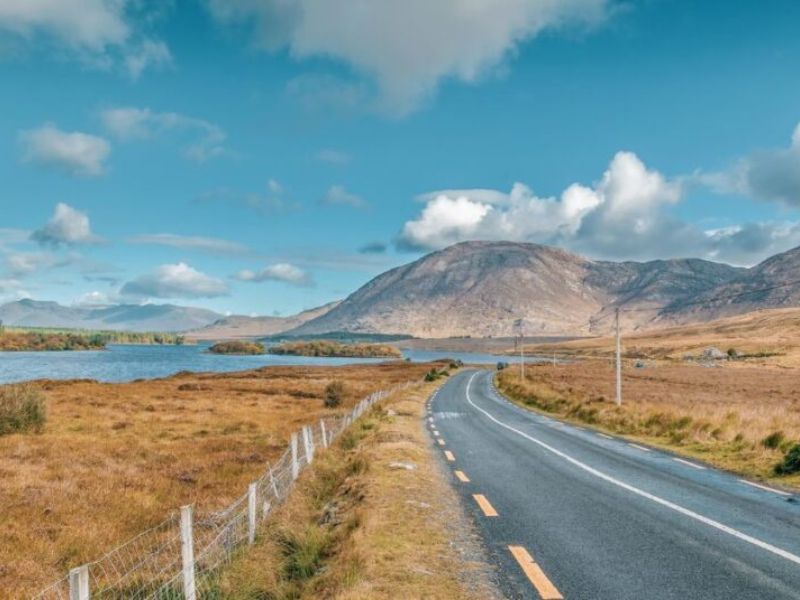
10. Don’t: Rush Your Drive
It can be hard to justify driving slowly when there is so much to see and do when in Ireland. Especially when you only have a few days to explore.
But when on those narrow, winding roads, speeding is a big no-no. Take your time, enjoy the lush countryside that Ireland is famous for and enjoy every moment.
You never know when you might stumble upon a hidden gem or two that wasn’t originally on your itinerary thanks to taking your time as you drive.
So, slow down, soak it all in, and let the stunning landscapes of Ireland work their magic!
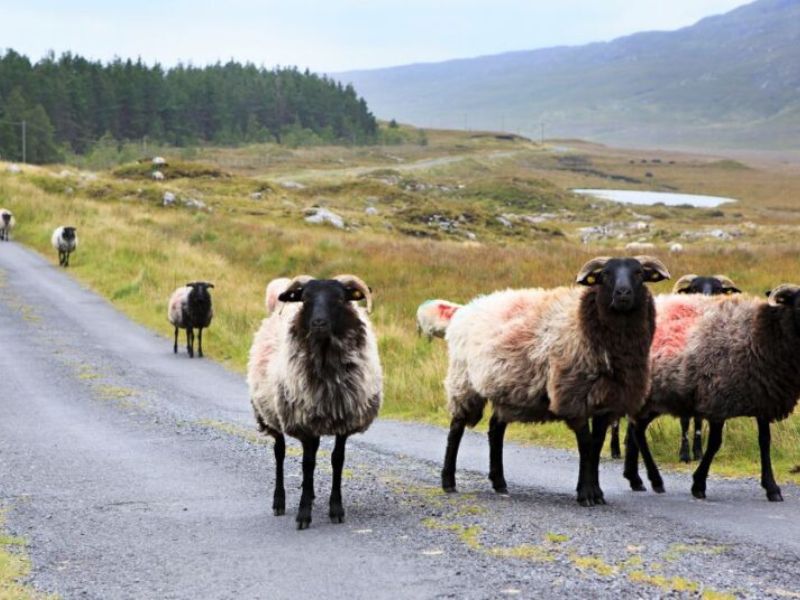
11. Do: Expect Sheep and Livestock on the Road
One Irish stereotype that is 100% likely to be true is there are more sheep than people!
When driving through the rural parts of Ireland, you might find yourself sharing the road with some unexpected traffic, sheep and other livestock!
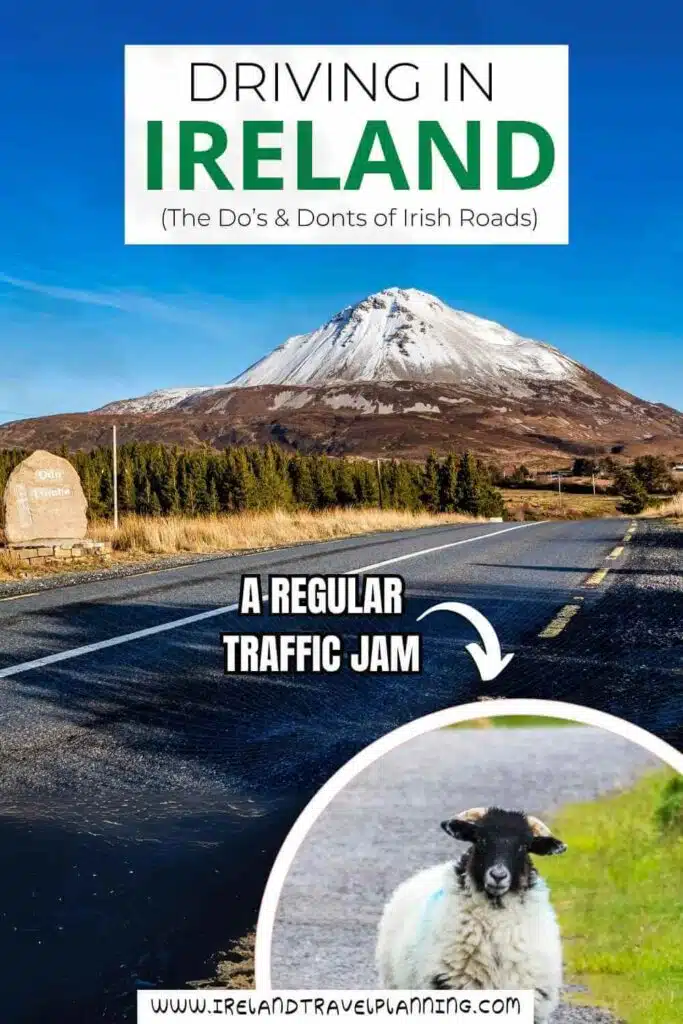
Yes, you read that right. It’s not unusual to see these fluffy creatures casually munching on grass right next to the road, and sometimes, they just decide to saunter across, staring at the car with little intention to move quickly.
If you encounter livestock, just slow down and come to a complete stop if necessary. And don’t beep your horn, this can be really distressing for the animals.
❌ AVOID EXPENSIVE ROAMING CHARGES: An affordable eSIM plan is the perfect solution! Airalo eSIMs work seamlessly across Ireland with their quick, easy and affordable plans use the code IRELAND10 for 10% off. (ROI Deals & ROI & NI Plans)
12. Don’t: Turn Left or Right on Red
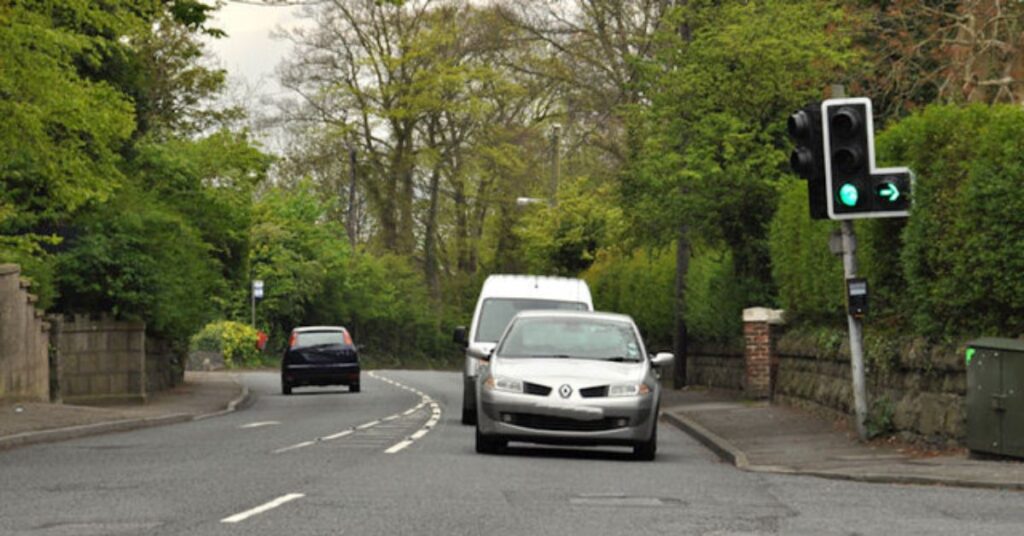
Here’s a driving tip that’s crucial to remember: in Ireland, you can’t turn left or right at a red light.
Unlike some other countries where that’s allowed, you need to come to a full stop and wait for the green light, no exceptions.
If you’re thinking about making a left turn on red, forget it!
Unless there’s a specific sign allowing it, at times there will be a specific turning light for the more difficult junctions.
If a turning light is not present, you wait for the main light to turn green and then drive into the turning box (at times can be faded) to allow cars going straight to pass.
You then make a turn once all the oncoming traffic has passed. If you notice the light start to turn red, once you have passed into the box you are ok to proceed with the turn.
And for right turns? Same rules apply, wait for that green light, especially at intersections where you’ll be crossing oncoming traffic.
13. Do: Use Your Horn Sparingly
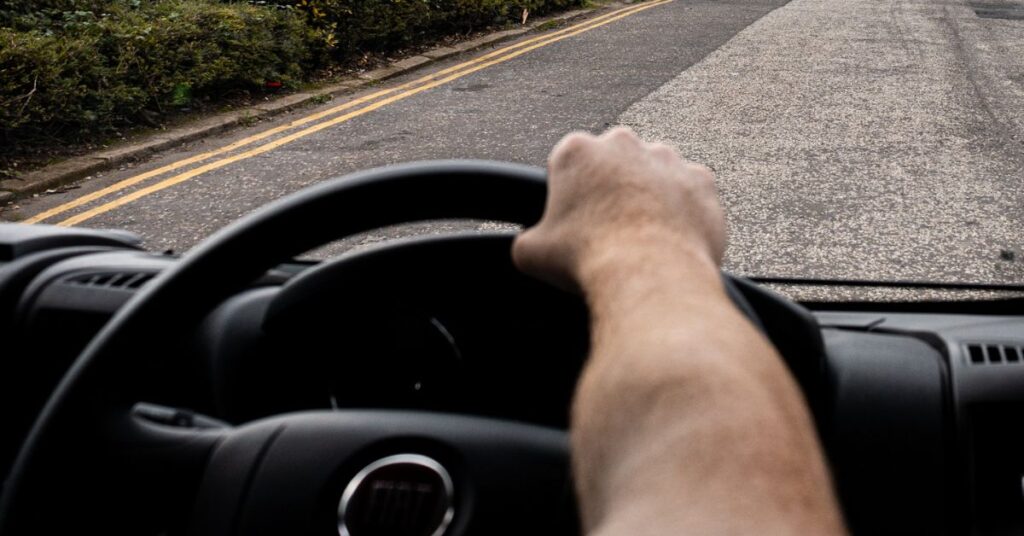
In Ireland, your horn isn’t your best friend for expressing frustration, it’s more of a safety tool (although some drivers with road rage in Dublin city may disagree with me here).
When you’re driving, use your horn sparingly and only when necessary. You’ll often hear it on sharp bends or to alert farm vehicles that you’re coming up behind them.
In essence, think of your horn as a polite “excuse me” rather than a “get out of my way!”
Now of course, if something dangerous is about to happen use you horn to alert other drivers. It’s important to keep everyone as safe as possible.
Avoid only visiting the same generic locations seen in every Ireland Travel guide…
Instead, spice up your itinerary with local hidden gems, lesser-known spots, and pull-ins that most drive past.
Sign up below for free access to my hand-picked Google Map Pins.
14. Don’t: Presume Ireland’s Small Size Equals Short Driving Times
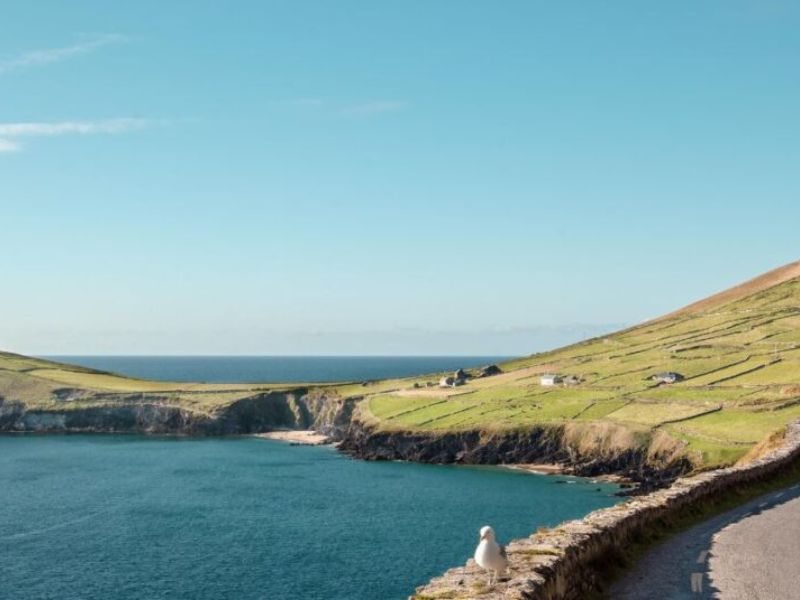
Don’t let Ireland’s petite size fool you, just because the map looks compact doesn’t mean you’ll zoom through the country in record time.
Those beautiful scenic routes you’ll want to take can stretch out your journey, especially when you’re navigating rural roads that wind and twist.
Most of Ireland’s beautiful landscapes are located on the Wild Atlantic Way, and believe me, some of the drives take much longer than you expect. Besides, you’ll be stopping every two minutes to take a picture of the views.
If you're feeling much more confident about driving now, the next step is simply finding the right rental. I normally compare prices on Discover Cars because you can quickly look at different companies, insurance options and vehicle sizes all in one place before making a decision.
📌 PIN THIS POST FOR LATER