Renting a Car in Ireland Tips (& Costly mistakes you should avoid)
Ireland Travel Planning uses affiliate links, including Amazon Associates. If you buy through these links, I may earn a small commission at no extra cost to you. I use a mix of my own photos and paid stock images across the site. (Disclosure Policy)
Renting a car is, hands down, the easiest way to explore Ireland properly. It gives you the freedom to slow down, take the scenic routes, and reach places most tour buses never touch.
But if this is your first time driving here, I know it can feel a bit daunting. Different road rules, narrow lanes, unfamiliar signs, and a rental process that doesn’t always feel straightforward.
So I did the digging for you.
I spent days going through Ireland travel forums, reading real questions from visitors who’ve already been here, the things that caught them out, what they wish they’d known, and what actually helped. Everything in this guide is based on those real experiences, not guesswork.
I’ll also share local insight on Irish roads, driving rules, and service stations, because a lot of driving in Ireland feels far less intimidating once you know what to expect before you get behind the wheel.
It's my mission for these renting a car in Ireland tips to leave you feeling prepared, confident, and able to enjoy the drive instead of stressing about it.
QUICK TIPS for IRELAND
AVOID HIGH ROAMING CHARGES
Airalo eSIMs work seamlessly across Ireland with quick, affordable data plans. Use code IRELAND10 for 10% off your plan (ROI Deals & ROI & NI Plans)
AIRPORT TRANSFER MADE EASY
Welcome Pickups is my go-to for reliable rides from the airport straight to your accommodation. I'd advise booking in advance for peace of mind.
DISCOVER UNIQUE activities
Check out GetYourGuide & Viator for unique things to do, like a DIY Claddagh Ring Workshop or a street food walking tour with a local.
DON’T SKIP INSURANCE!!
I can't stress this enough, but travel insurance is an absolute must! Thankfully, VisitorsCoverage is great for comparing affordable, trusted insurance plans to find one that actually suits your needs.
AVOID OVERPAYING FOR CAR RENTALS
Before booking your rental, I'd advise checking out comparison tools like DiscoverCars to ensure you're getting the best deal on the market.
NEED A LAST MINUTE PACKING FIX?
You'd be surprised how many visitors regret not packing waterproof trousers (like these) or a universal travel adapter (like this). That's why I created this Amazon essentials list for those last minute packing needs.

Local driving resources you might find handy
Before we get into the rental side of things, a quick introduction. I’m Laura Grace, a local Irish travel expert, and I know hiring a car here can feel like one of the more stressful parts of planning your first trip.
A few practical resources will make the whole thing feel a lot easier:
- Driving in Ireland Tips – the road rules, roundabouts, narrow lanes and little things that tend to catch first-time drivers out.
- Ireland Pre-Book Checklist – car hire is only one of a few things worth sorting before you arrive, particularly in the busier months.
- Dublin Public Transport – very handy if you’re spending time in the capital, because I really don’t recommend keeping a rental car just to drive around Dublin city.
- Ireland Packing List – especially useful if you’re planning a road trip with hiking stops, changeable weather and a boot full of luggage to think about.
- Tourist Mistakes in Ireland – because driving isn’t the only thing that works a little differently here.
And if you’re still piecing everything together, my Free Ireland Resource Library has plenty more practical help for planning the rest of your trip.
First, let’s look at…
why you should rent a car in Ireland…
First, let’s look at why renting a car in Ireland is worth it.
The biggest advantage is flexibility. You’re not tied to timetables, tour stops, or fixed routes.
If you want to linger somewhere longer, take a detour, or change plans on the fly, you can. And honestly, some of the best days happen that way.
Public transport in Ireland works well between cities and larger towns, but it’s limited once you head towards the coast or rural areas.
Places like Connemara are a good example, where having a car gives you far more freedom to explore.
That’s where most of the dramatic scenery is, and it’s also where buses become infrequent or stop altogether. Having a car makes those places realistic, not stressful.
When it comes to pricing, I usually start by checking Discover Cars. Ireland car hire prices can jump around a lot depending on season, car type, and how close you are to travel, so this helps you gut-check prices before committing to anything.
What YOU CAN sort before you even land
If you like having the big things handled early, this is the short list I’d focus on before you fly.
Car hire, insurance and phone data are all worth adding to your Ireland pre-book checklist rather than trying to sort everything after you land.
1. Get a rough idea of car rental prices
You don’t need to book straight away, but it really helps to know what’s normal for your dates and car type. I usually start by checking Discover Cars so I’m not guessing or overpaying later.
2. Make sure your phone data will actually work
You’ll be relying on Google Maps more than you think, especially when you first leave the airport. Having a eSim plan set up in advance means directions work straight away, no scrambling for Wi-Fi or dealing with roaming surprises.
3. Have travel insurance sorted
This is separate from car rental insurance. That covers the vehicle. Travel insurance covers you if something unexpected happens, like needing medical care or cutting a trip short. It’s one of those things you hope you won’t need, but you’ll be very glad you have if you do.
Section 1: Choosing the Right Car For Your Irish Road Trip
The smaller, the better
When it comes to renting a car in Ireland, smaller is usually easier. Irish roads can be narrow, especially once you leave cities and motorways, so a compact car feels far less intimidating.
My first car was a Toyota Yaris, and it got me through some very tight spots as a new driver. You don’t need anything big to get around comfortably here.
Match the car to your group and luggage
That said, size still matters if you’re travelling with a group or packing heavily. Sitting crammed in the back on a three-hour drive from Dublin to Galway isn’t fun, and luggage space disappears quickly.
Four large suitcases simply won’t fit into a small car, so if you’re travelling with multiple people or bulky bags, upsizing slightly will save you a lot of frustration.
It’s also worth being realistic with your Ireland packing list, because luggage space disappears much faster than you think once everyone’s bags are in the boot.
Automatic vs manual
Most cars in Ireland are manual, which is why they’re usually cheaper to rent. Automatics are more common now, but they’re still limited and often book out first.
When you’re comparing options, make sure you filter for automatic from the start. I see people assume they’ll switch later, and that’s when prices jump, or availability disappears.
If you’re not fully confident driving a manual, I strongly recommend paying extra for an automatic. You’ll already be adjusting to driving on the left, different road layouts, and unfamiliar signage.
There’s no need to add another stress on top of that. Some driving licences also don’t cover manual vehicles, so it’s worth checking before you book.
PLANNING ON RENTING A CAR IN IRELAND?
I highly recommend keeping an eye on the rental prices ahead of time by using comparison tools like Discover Cars to find the best prices on the market.
Section 2: Ireland Car Rental Insurance Tips
When renting a car in Ireland, insurance is one of the most confusing parts of renting a car in Ireland, and it’s also the bit that causes the most stress at the counter. Once you understand how it works, it’s actually very straightforward.
Book insurance through the rental company
One thing that catches a lot of visitors out is the large security hold placed on your card during the rental period. This can be several thousand euros and usually stays on your card until the car is returned without damage.
The easiest way to avoid surprises is to read the insurance details carefully before you book. When you’re comparing options, it helps to look at the full breakdown of what’s included, what’s excluded, and whether a deposit will be required.
That’s where using a comparison site like Discover Cars can be useful, as you can see those details upfront rather than finding out at the desk. This alone can save a lot of pressure at pick-up, when you’re tired, jet-lagged, and just want the keys.
On Ireland travel forums, NewWay comes up a lot for this reason. Their pricing includes full insurance upfront, so there’s no large deposit required at pick up, which many people find far less stressful.
Drive in Ireland
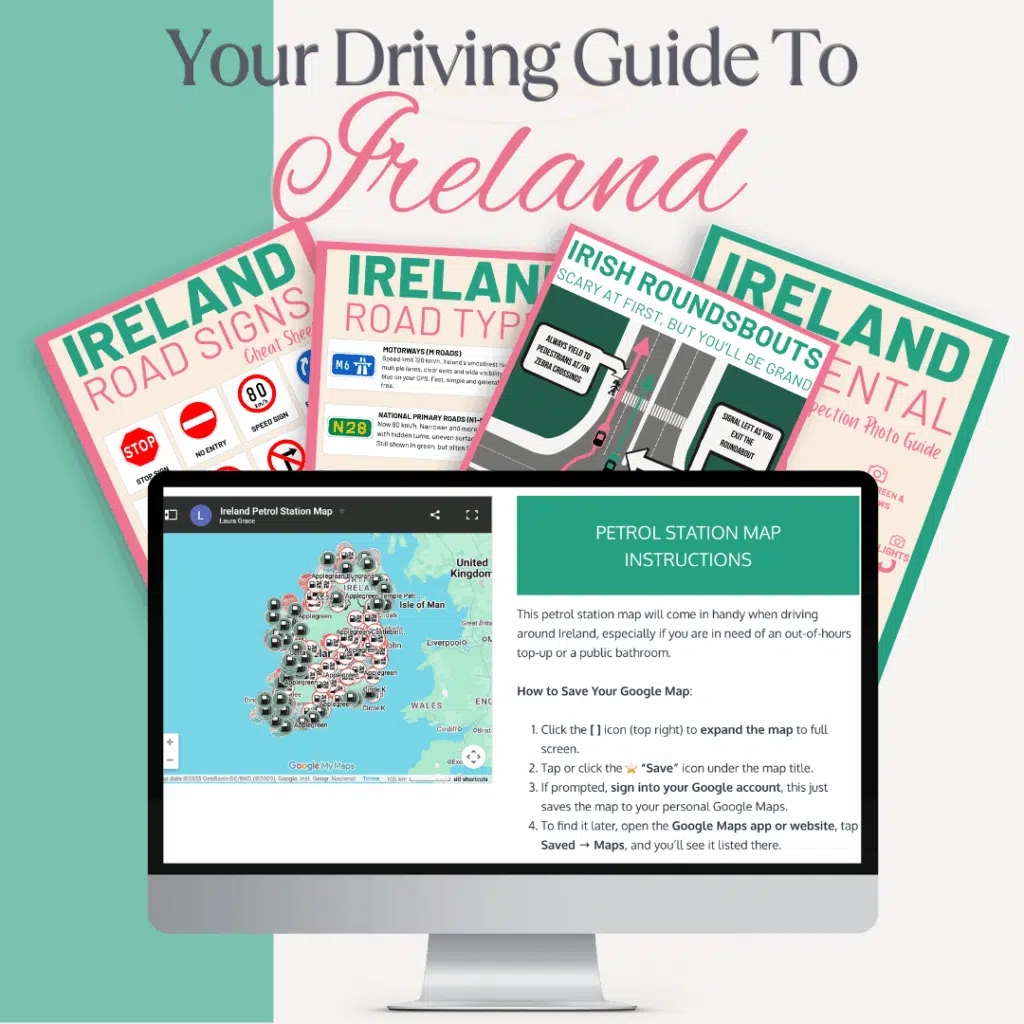
Feeling nervous about driving in Ireland? You’re not the only one… and you don’t have to figure it out alone.
The Ireland Driving Toolkit is a practical guide with clear local advice and no guesswork.
✔️ Custom Google Maps with petrol stations and toll roads mapped out.
✔️ Cheat sheets for roundabouts, road signs and km to miles.
✔️ Straightforward tips on tolls, navigation and what to expect on different road types.
Plus, the small local details most guides skip, but make all the difference once you’re here.
Types of insurance in Ireland
There are two main types of car rental insurance you’ll see in Ireland, CDW and SCDW.
CDW (Collision Damage Waiver)
CDW is mandatory when renting a car in Ireland and is usually included in the daily rate. It covers damage to the car up to a set excess amount, which depends on the size of the vehicle. This is often around €3,000. If damage exceeds that amount, you’re responsible for the difference.
SCDW (Super Collision Damage Waiver)
SCDW is the upgrade I strongly recommend. It reduces your excess to zero, meaning you shouldn’t be liable for damage costs. Some policies do exclude things like tyres, windscreens, or the undercarriage, so it’s always worth checking the fine print before paying.
In some cases, those exclusions can be added on separately. For most people, it’s worth it. Peace of mind goes a long way when you’re driving unfamiliar roads, and it lets you focus on enjoying the trip rather than worrying about every bump or loose stone.
Credit Card Insurance (the Bonus Option)
If your credit card offers rental car insurance that covers Ireland, you could save a decent amount of money. Full insurance through a rental company can cost around €70 per day, so it’s easy to see why this option is tempting.
That said, Ireland is excluded from many credit card policies. In fact, it’s more often excluded than included, so this is something you need to check very carefully before relying on it.
What to check before you consider this
First, confirm that your credit card insurance explicitly covers the Republic of Ireland. Many policies don’t. You’ll also need to confirm the maximum coverage amount and whether there’s a deductible.
If you plan to use credit card insurance, you’ll need a cover letter from your card provider dated within 30 days of your rental. This letter must state that you’re covered in Ireland and outline the coverage limits. You’ll be asked for this at the rental desk, and without it, you’ll be required to buy the rental company’s insurance instead. There’s usually an admin fee for this, typically around €35.
Why IT can get complicated
Many rental companies automatically include basic CDW and don’t always make it easy to decline. If you accept the rental company’s CDW, your credit card insurance usually becomes invalid. That’s where people get caught out.
When you’re comparing rentals, it helps to check whether CDW is optional and how insurance is applied before you arrive. Using a comparison site like Discover Cars can make this clearer upfront, as you can see what’s included and what can be declined before you book. That said, every rental has its own terms, so this is never guaranteed.
Is it worth it?
If everything lines up, credit card insurance can give you coverage with no deductible, which is a definite win. But it requires prep, paperwork, and very careful reading of the terms.
For many people, paying for full insurance through the rental company is simply the least stressful option. For others who are happy to do the admin, credit card insurance can work well. There’s no single right answer here, just the option that makes you feel most comfortable before you arrive.
🚨 DON'T SKIP INSURANCE: I can't stress this enough, but travel insurance is an absolute must! Thankfully, VisitorCoverage is a great tool when comparing affordable plan options.
Section 3: Booking Strategies & Budgeting Tips
Book well in advance
Car rental prices in Ireland usually increase the closer you get to your travel dates, especially during peak season.
If you like having the main thing roughly sorted early, I’d start by pricing it out on Discover Cars and keeping an eye on it for a few days.
You’ll quickly see what’s reasonable for your dates and what’s overpriced. Particularly if you need an automatic or a specific car size.
Consider travelling off-season
If you’re visiting outside peak months, like November, rental prices are often lower due to reduced demand.
The best time to visit Ireland really depends on your travel style, but quieter months can make both car hire and road trips noticeably easier.
Don’t drive in Dublin
If you’re considering car rental in Dublin, it’s important to know the city is not particularly car-friendly. There are restricted turns, bus-only streets, confusing one-way systems, and parking costs that can easily exceed €4 per hour. It adds up quickly.
Public transport within Dublin is more than enough for getting around, and the city centre is very walkable.
If Dublin is part of your itinerary, it’s best to explore it first and pick up your car afterwards. There are plenty of easy ways to get from Dublin Airport to the city centre without needing a rental car from the minute you land.
It’s also worth comparing prices with a later pick-up date, as shorter rentals or non-city collections can sometimes work out better.
Pick up your car at the airport
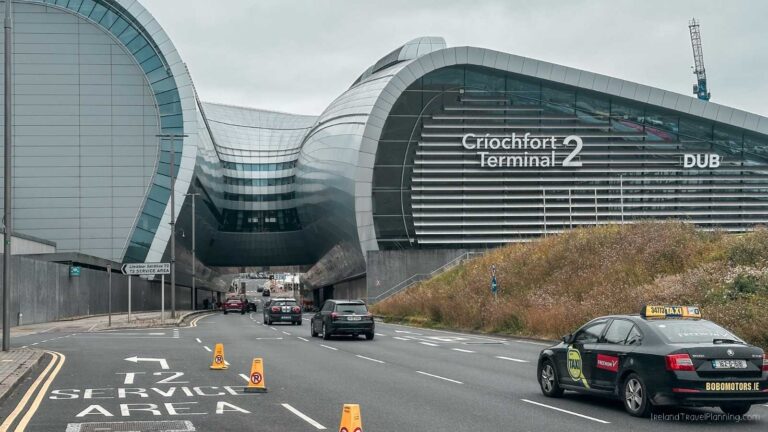
If Dublin isn’t your first stop, collecting your car at the airport is often the easiest option. Dublin Airport is just off the motorway network, which gives you a gentler introduction to driving on the left before tackling smaller roads.
Inspect the car before driving off
Before leaving the car park, take timestamped photos or a quick video of the car. Make sure to capture any existing scratches, dents, or marks. This protects you from being charged for damage you didn’t cause.
And if you’re collecting the car in poor light or late in the evening, a small head torch makes it much easier to spot existing marks properly.
Return the car with a full tank
Most rental companies charge inflated rates if they need to refuel the car for you. Filling up nearby before drop off is usually much cheaper and avoids unnecessary fees.
Check for a spare wheel and jack
Not all rental cars come with a spare wheel or jack. It’s worth checking before you leave, especially if you’re planning to drive rural roads.
Driving licence requirements
One of the most asked questions is about renting a car in Ireland requirements is about international driver's license.
EU and English-speaking driving licences are valid in Ireland, so an international driving permit isn’t required. That said, some travellers receive conflicting advice, so it’s always worth confirming licence requirements directly with your rental provider before you arrive.
Age restrictions
Minimum age requirements vary by company. Drivers under 25 or over 75 may face additional fees or restrictions, so check this in advance to avoid surprises.
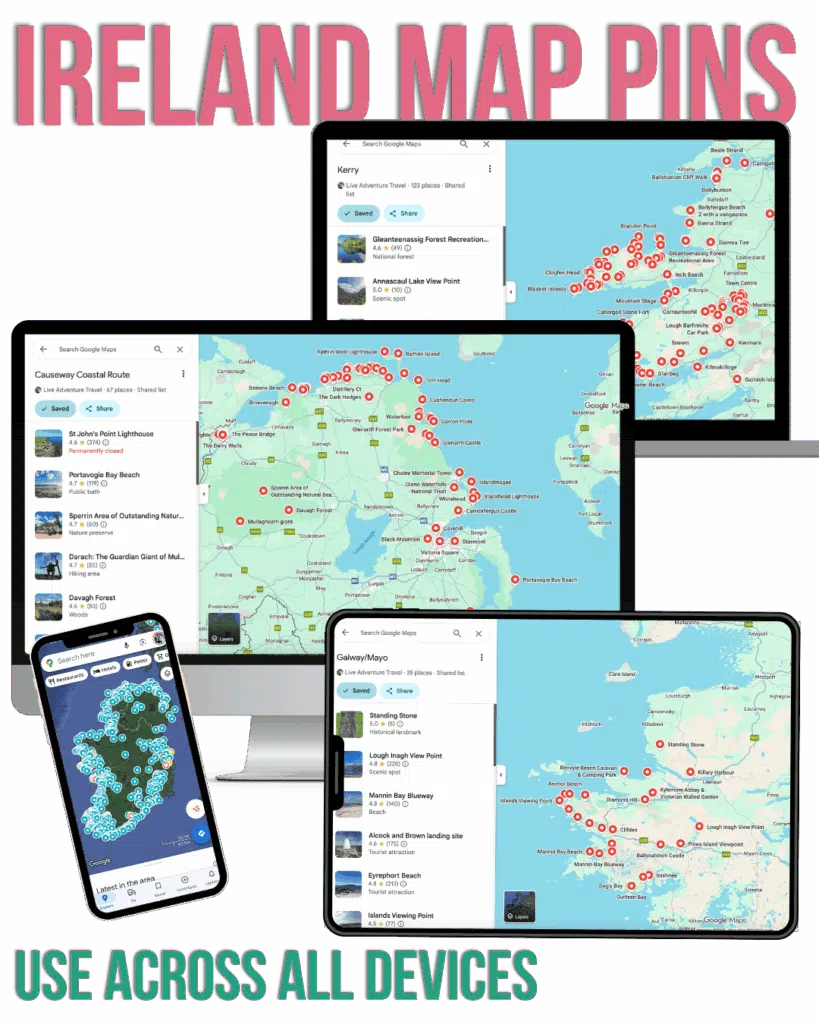
Avoid only visiting the same generic locations seen in every Ireland Travel guide…
Instead, spice up your itinerary with local hidden gems, lesser-known spots, and pull-ins that most drive past.
Sign up below for free access to my hand-picked Google Map Pins.
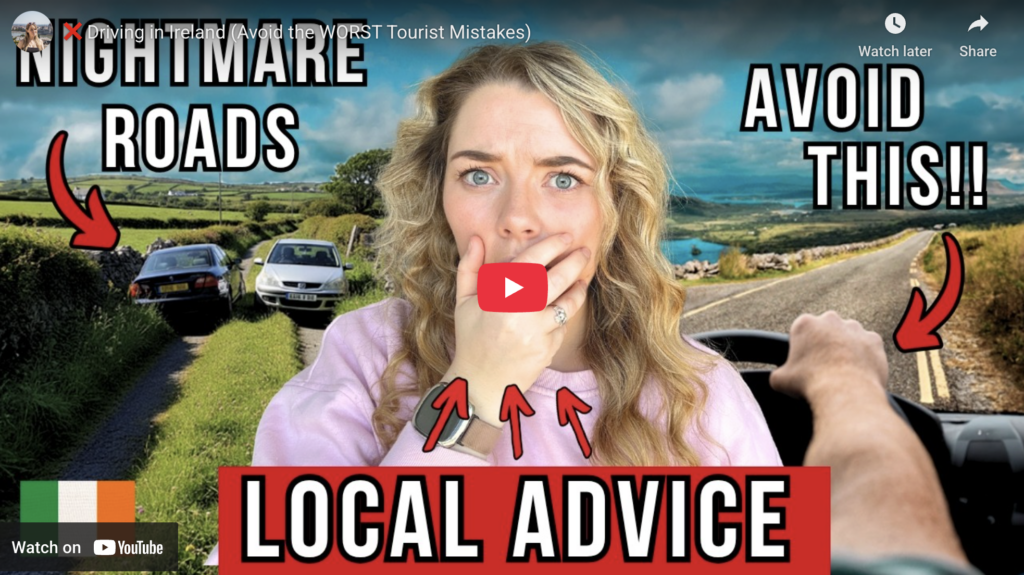
❌ Driving in Ireland (Avoid the WORST Tourist Mistakes)
Looking for more tips on how best to drive on Irish roads? Then pop the kettle on, stick this on the TV, and let me talk you through the key things to consider. This video covers the bits most visitors get caught out by, so you can plan with a bit more confidence and a lot less stress.

Section 4: Driving Techniques & Tips
This is the part most people feel a bit nervous about. Driving on the left, narrow roads, roundabouts, unfamiliar signs, it can sound like a lot before you’ve actually done it.
In this section, I’ll walk you through the basics of how Irish roads work and what to expect once you’re behind the wheel, so nothing feels like a surprise.
And if you’re reading this thinking “I just want to feel confident before I arrive”, I’ve also put everything into my Ireland Driving Toolkit.
It’s designed specifically for first-time drivers and includes clear explanations, quick-reference guides for road signs and roundabouts, and practical tips you can check anytime to put your mind at ease.
Get familiar with Ireland’s road system
Irish roads are labelled by type, which gives you a good idea of what to expect before you drive them.
- Motorways (M roads): These are similar to US interstates, with on and off ramps and multiple lanes. Speed limits usually range from 100 to 120 km per hour, and they’re the easiest roads to drive on.
- National roads (N roads): These connect cities and large towns where no motorway exists. They’re generally straightforward to drive, with more of a countryside feel but without sharp bends. Speed limits are usually 100 km per hour.
- Regional roads (R roads): These are smaller, two-lane roads and can vary a lot. Some are wide and comfortable, others feel much tighter. You’ll often meet oncoming traffic close up, but they’re manageable if you take your time.
- Local roads (L roads): Tourists usually end up on these because Google Maps claims they’re “shorter”. In reality, they’re narrow access roads to homes or farms. Despite an official speed limit of 80 km per hour, even locals drive much slower on them.
Mountain passes and gaps
You’ll also see roads referred to as a pass or a gap. These are scenic routes through mountainous areas and often feature narrow lanes and steep drops.
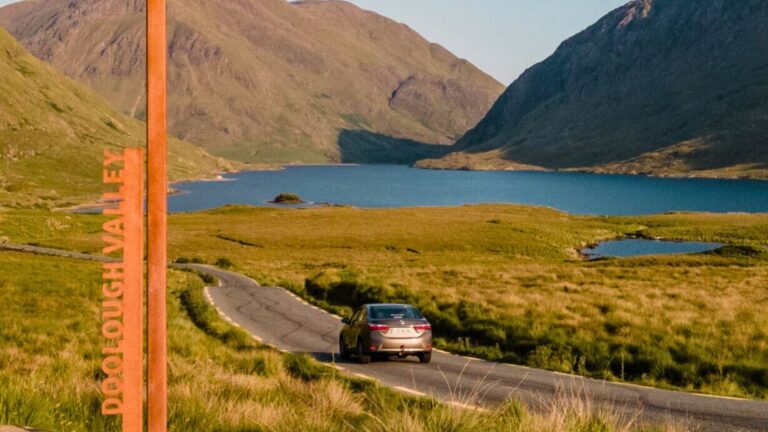
Some of the most famous include Connor Pass in Kerry, Doolough Valley in Mayo, and Sally Gap in Wicklow.
They’re incredibly beautiful, just take them slow and steady. That same rule applies to most Ireland driving tips, because rushing unfamiliar roads is nearly always what makes them feel harder than they need to.
If narrow mountain roads aren’t your thing, you don’t have to write these places off entirely.
Another way people experience areas like this is by checking out small guided trips or scenic tours on tour websites like Get Your Guide or Viator, which let you enjoy the views without worrying about the drive.
Navigation tips
Google Maps often suggests L roads to save time, but they usually take longer and feel more stressful. Turning off “prefer fuel-efficient routes” can help avoid being routed down very narrow roads.

Drive on the left
In Ireland, you always drive on the left. A simple trick is to wear your watch on your left wrist as a reminder. Most rental cars also have dashboard or windscreen stickers, and you’ll see reminders when joining major roads.
Roundabouts
Roundabouts are everywhere. You always yield to traffic coming from the right, and you should never stop inside the roundabout to read signs. It’s worth familiarising yourself with how they work before your trip, as once you get the flow, they’re very efficient.
If roundabouts feel unfamiliar, this driving instructor’s YouTube video walks you through exactly how they work.
Overtaking etiquette
On motorways, the right lane is for overtaking only. If you’re not overtaking, stay in the left lane. This keeps traffic flowing smoothly and avoids frustrating faster drivers.
Section 5: Helpful tips for driving carefree in Ireland
Use Eircodes for navigation
Google Maps really is your best friend here. That does depend on having reliable mobile data, though. If Maps suddenly stops loading mid-drive, stress levels spike fast, especially on rural roads.
This is where an eSIM can really save your nerves. Airalo is my go-to because it’s set up before you arrive, so directions work the minute you leave the car park.
And, a simple phone holder, like this one, can also make a big difference, it keeps directions at eye level so you’re not glancing down or fumbling with the phone while driving.
For precise directions, use Eircodes, Ireland’s postcode system. Each address has its own unique seven-character code, and you don’t need to enter the full address at all. Just pop the Eircode into Google Maps, and it’ll take you straight there.
The Post-it note trick
A simple but surprisingly effective tip is to stick a few post it notes inside the car. These can remind you to stay on the left, flag common road signs, or help convert speed limits from kilometres to miles. It sounds small, but it really helps in those first few days.

Talk yourself through it
Vocalising what you’re doing can genuinely help override instinct. Saying things like “staying left” or “turning left” as you drive keeps your brain focused and reduces autopilot moments, especially at junctions.
Be mindful of GPS shortcuts
Google Maps often suggests L roads because up until recently, they had an 80 km per hour speed limit.
Blindly trusting every shortcut is one of those tourist mistakes in Ireland that sounds harmless until you’re halfway down a road with grass growing up the middle.
If your GPS suddenly pulls you off a main road, it’s worth pulling over for a moment and checking the route. There’s often a slightly longer but much easier option. Nine times out of ten, it’s the better choice.
Having steady data makes that pause much less stressful, especially if you’re somewhere with no nearby towns or cafés.
❌ AVOID EXPENSIVE ROAMING CHARGES: An affordable eSIM plan is the perfect solution! Airalo eSIMs work seamlessly across Ireland with their quick, easy and affordable plans use the code IRELAND10 for 10% off. (ROI Deals & ROI & NI Plans)
Section 6: Parking, Tolls & Service Stations
Be prepared to pay for parking
Paid parking is common across Ireland. In cities and larger towns, you can usually pay by card or app, but some smaller towns and rural areas still rely on coin-operated machines. Keeping a small stash of euro coins will save you hassle.
Tolls on Irish roads
Some motorways in Ireland are tolled, including the M50 around Dublin. The M50 uses an electronic toll system, so you won’t stop to pay as you drive through.
You’ll need to pay the toll online by 8pm the following day, or arrange payment in advance through your rental company. Other toll roads across the country usually accept both cards and cash.
Keep an eye on fuel prices
Fuel prices can vary between service stations, sometimes quite noticeably. Try not to let your tank run too low so you’re not forced to refuel at the first or most expensive station you see.
Diesel vs petrol
Irish service stations sell both diesel and petrol, and it’s very important to know which one your rental car takes. Putting the wrong fuel in the car can cause serious engine damage and is a very costly mistake.
Diesel cars are common in Ireland and tend to be more fuel efficient, so don’t assume petrol by default.
Fuel pump colours
This catches a lot of visitors out. In Ireland, diesel pumps are black and petrol pumps are green, which is the opposite in other countries, like the US, for example. It’s a small detail, but a crucial one.
Using Irish service stations
All service stations in Ireland are self-service. You fill the car first, then go inside and tell the assistant which pump number you used before paying at the till. Many newers stations now also offer pay at the pump with a debit or credit card.
Currency tip at the till
If you’re asked whether you’d like to pay in euros or your home currency, always choose euros. Paying in your home currency usually comes with a worse exchange rate.
NEED A LAST-MINUTE PACKING FIX?
You'd be surprised how many visitors regret not packing waterproof trousers (like these) or a universal travel adapter (like this). That's why I created this Amazon essentials list for those last-minute packing needs.
Section 7: Safety and Emergency Tips
car insurance ≠ travel insurance
This is separate from car rental insurance. That covers the vehicle. This is about you if something unexpected happens while you’re travelling.
If you’re travelling to Ireland from abroad, it’s always worth having proper travel insurance in place before you arrive.
I usually recommend VisitorsCoverage, as it lets you compare policies and choose something that suits your trip and budget.
Be careful on grass and soft ground
Even on dry or sunny days, grassy areas can be softer than they look, especially after rain. Pulling over onto grass or muddy ground can easily get a car stuck, with wheels spinning and no traction.
I learned this the hard way years ago while renting a camper van. It was a bright day, but rain earlier in the week had softened the ground more than I realised. If you need to pull in, aim for solid ground whenever possible.
Emergency numbers in Ireland
In an emergency, you can call 112 or 999. Both numbers connect you to fire, ambulance, or Gardaí services anywhere in Ireland.
Hopefully, you’ll never need those numbers, but it’s worth knowing how medical costs are handled too. And again, this is where Travel insurance comes into play, it covers you if you need treatment, hospital care, or help getting home.
Know your breakdown cover
Before setting off, take a few minutes to check what your rental company offers in the event of a breakdown. Knowing who to call and what support is included will save a lot of stress if something goes wrong.
Driving on narrow roads
Irish roads, especially in the west, can be much narrower than you might expect. This isn’t something to be afraid of, just something to stay mindful of. Stone walls, hedges, and bushes can sit very close to the road and sometimes hide signs or obstacles.
Take your time, slow down when needed, and remember that everyone else on the road is used to these conditions.
And if you’re still feeling unsure about routes, timing, or whether driving makes sense for your trip at all, you can always book a 1:1 planning call with me. Sometimes one clear conversation replaces weeks of second-guessing.
Section 8: Driving in Northern Ireland
Driving in Northern Ireland
If your trip includes crossing into Northern Ireland, there are a few important things to be aware of, but nothing that should put you off.
Having a car is particularly useful if you’re heading towards places like the Giant’s Causeway or exploring more of the Causeway Coast.
Let your rental company know
Most rental companies allow cross border travel, but you’ll need to tell them in advance. There’s usually a small fee, often around €30, to make sure you’re fully insured once you cross the border. It’s a quick admin job, just don’t leave it until pick up.
Speed limits switch to miles per hour
One thing that does change is the speed limits. In the Republic of Ireland, speeds are shown in kilometres per hour. In Northern Ireland, they switch to miles per hour.
Here’s a rough guide to help you adjust. These are estimates, not exact conversions.
50 km/h ≈ 32 mph
60 km/h ≈ 36 mph
80 km/h ≈ 48 mph
100 km/h ≈ 62 mph
120 km/h ≈ 75 mph
Most modern rental cars will let you switch the digital speedometer between km/h and mph, which makes this much easier.
Road signs and what actually changes
You won’t pass through a hard border or checkpoint when crossing into Northern Ireland. In fact, many people don’t even notice when they’ve crossed.
The most obvious difference is road signage. In the Republic, signs are bilingual in Irish and English. In Northern Ireland, they’re in English only. Road layouts, driving style, and road conditions feel very similar on both sides.
Make sure your phone coverage works
If you’re relying on Google Maps or GPS, having a reliable data plan that works on both sides of the border, like this one, really matters.
This is where an eSIM makes life so much easier. Airalo is my go-to. And I have a cheeky discount code for you, IRELAND10 at checkout will get you 10% off your plan.
📌 PIN THIS POST FOR LATER

Renting a car in Ireland Tips: FAQ'S
Q: Does it make sense to rent a car in Ireland?
A: Absolutely. Renting a car in Ireland gives you the flexibility to explore rural and coastal regions that public transport doesn't reach. It’s the best way to access off-the-beaten-path locations.
Q: Do I need extra insurance when renting a car in Ireland?
A: Yes, while CDW insurance is mandatory, many travellers opt for SCDW or full coverage to reduce excess and avoid large security deposits. Extra insurance for renting a car in Ireland adds peace of mind.
Q: What is the best company to rent a car from in Ireland?
A: Many users recommend comparison tools like DiscoverCars or providers like NewWay for transparent pricing and included car rental insurance in Ireland.
Q: What is the etiquette for rental cars?
A: Always drive on the left, stay in the correct lane, and return the vehicle with a full tank. Familiarising yourself with car rental in Dublin road rules is a plus if starting your trip in the city.
Q: What to avoid when renting a car?
A: Avoid last-minute bookings, driving in Dublin city, or skipping full insurance. These renting a car in Ireland tips will save you stress and money.
Q: Should you take out extra insurance when renting a car?
A: Yes, especially SCDW. It drastically reduces your liability and often includes coverage for tires, windshields, and undercarriage damage.
Q: What are the rules for renting a car in Ireland?
A: Basic renting a car in Ireland requirements include having a valid license, being within the age limit (usually 25–75), and a credit card for deposit.
Q: What happens if I decline CDW?
A: Declining CDW insurance in Ireland can mean your credit card coverage kicks in—but only if it explicitly includes Ireland and you provide written proof. Otherwise, you’ll be required to buy coverage on the spot.
Q: Does my car insurance cover me to drive in Ireland?
A: Most domestic insurance plans do not cover international rentals. Always confirm with your provider and check if Ireland is included in your credit card rental insurance.