Driving in Ireland as an American
Ireland Travel Planning uses affiliate links, including Amazon Associates. If you buy through these links, I may earn a small commission at no extra cost to you. I use a mix of my own photos and paid stock images across the site. (Disclosure Policy)
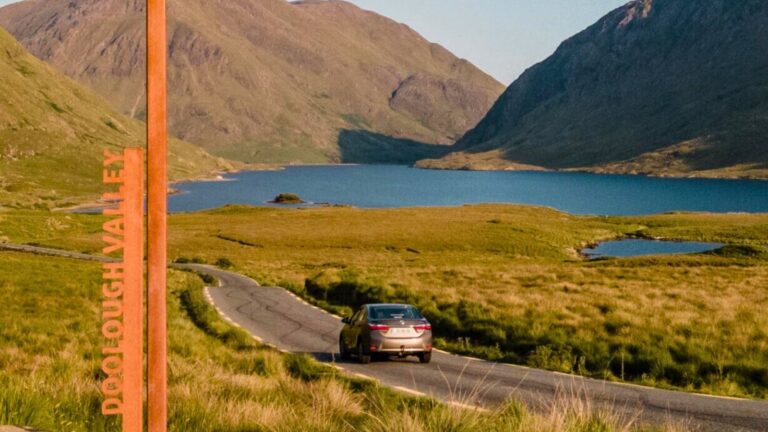
Driving in Ireland as an American is probably nowhere near as scary as social media has led you to believe. Yes, we drive on the left, our roundabouts run clockwise, and some of our country roads are ridiculously narrow. But there’s also an awful lot that will feel familiar.
I’m Irish, and I’ve experienced the reverse when driving abroad. It can feel strange getting behind the wheel on the opposite side of the car, but you’d be surprised how quickly you can begin to adjust.
The trick is getting familiar with the differences before you arrive.
So, I’m going to compare driving in Ireland with what you’re already used to in the US, from road signs and roundabouts to rental cars, speed limits and even filling up at a petrol station. I’ll also share my own tips for navigating Irish roads, including how to handle those narrow country lanes without giving yourself an unnecessary heart attack.
QUICK TIPS for IRELAND
AVOID HIGH ROAMING CHARGES
Airalo eSIMs work seamlessly across Ireland with quick, affordable data plans. Use code IRELAND10 for 10% off your plan (ROI Deals & ROI & NI Plans)
AIRPORT TRANSFER MADE EASY
Welcome Pickups is my go-to for reliable rides from the airport straight to your accommodation. I’d advise booking in advance for peace of mind.
DISCOVER UNIQUE activities
Check out GetYourGuide & Viator for unique things to do, like a DIY Claddagh Ring Workshop or a street food walking tour with a local.
DON’T SKIP INSURANCE!!
I can’t stress this enough, but travel insurance is an absolute must! Thankfully, VisitorsCoverage is great for comparing affordable, trusted insurance plans to find one that actually suits your needs.
AVOID OVERPAYING FOR CAR RENTALS
Before booking your rental, I’d advise checking out comparison tools like DiscoverCars to ensure you’re getting the best deal on the market.
NEED A LAST MINUTE PACKING FIX?
You’d be surprised how many visitors regret not packing waterproof trousers (like these) or a universal travel adapter (like this). That’s why I created this Amazon essentials list for those last minute packing needs.
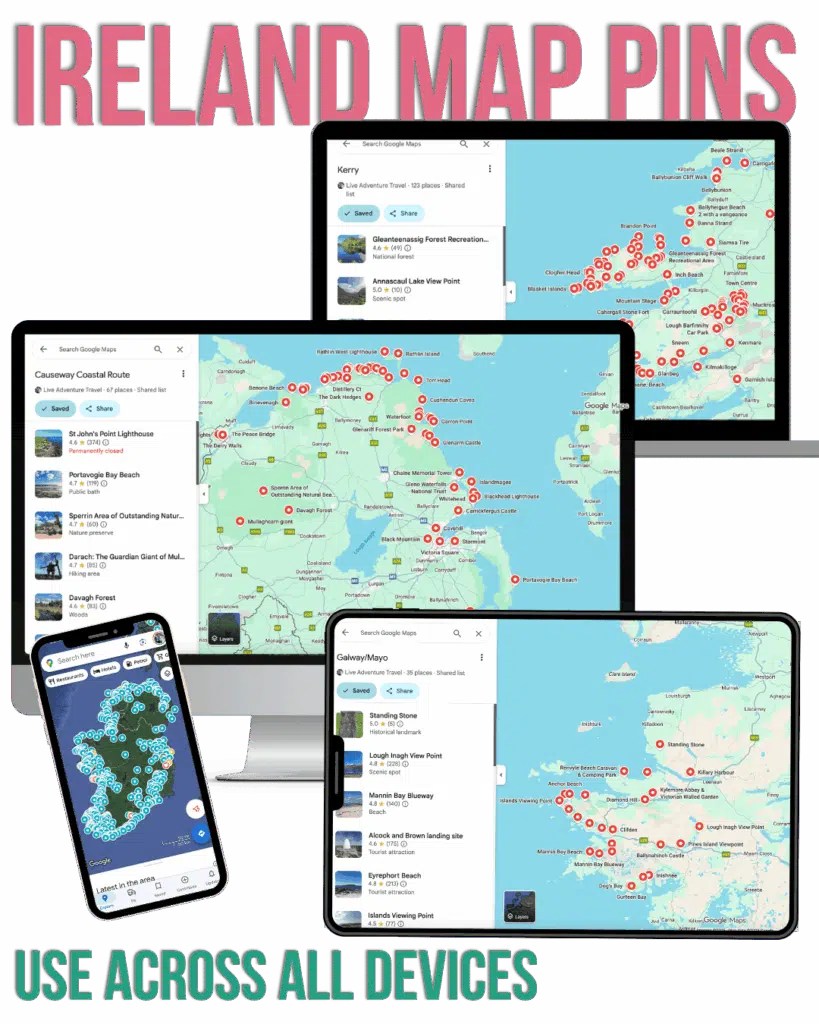
Avoid only visiting the same generic locations seen in every Ireland Travel guide…
Instead, spice up your itinerary with local hidden gems, lesser-known spots, and pull-ins that most drive past.
Sign up below for free access to my hand-picked Google Map Pins.
Is Driving in Ireland Difficult for Americans?
Social media can make it look as though every Irish road is a tiny lane with stone walls and grass growing up the middle. Those roads exist, but we also have modern motorways and plenty of straightforward main routes.
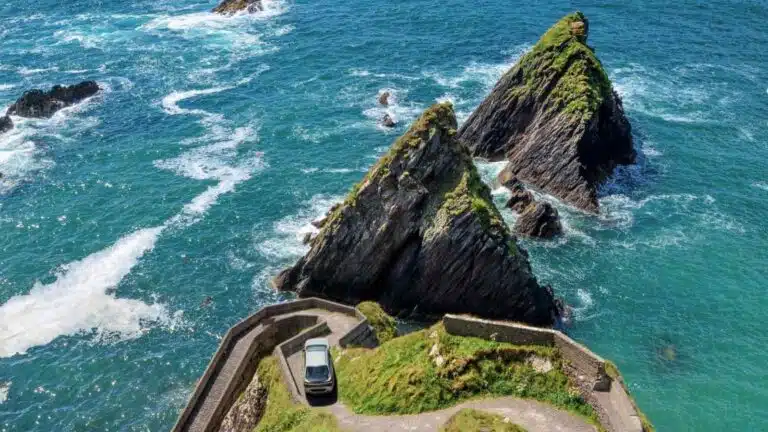
You may encounter narrower roads around coastal areas, villages and scenic attractions, but that doesn’t mean every drive will be difficult.
For Americans driving in Ireland, the biggest adjustments are usually driving on the left, approaching unfamiliar junctions and judging space on narrow roads. Getting familiar with these differences before your trip can make them feel much less daunting.
My advice: Don’t judge Irish driving by videos of our narrowest roads. Look up your actual routes so you know what to expect.

Driving in Ireland resources you might find handy
Before we get into road signs, roundabouts and the other bits that might feel a little unfamiliar, a quick note. I’m Laura Grace, an Irish travel expert and the person behind Ireland Travel Planning. If you’re planning to explore Ireland by car, these guides should help with some of the practical decisions that usually come next.
- Renting a Car in Ireland: Tips & Advice – useful for understanding the insurance, rental conditions and little details worth checking before you book.
- Ireland’s Driving Rules for Tourists – handy if you’d like a closer look at the rules before you get behind the wheel.
- Is Renting a Car in Ireland Worth It? – worth a read if you’re wondering whether to collect your car straight away or spend a few days in Dublin first.
- What to Book in Advance in Ireland – because your rental car isn’t the only thing that’s worth organising before your trip.
- How Many Days Should You Spend in Ireland? – helpful when figuring out how much ground you can realistically cover without spending half your holiday driving.
They work particularly well alongside this post if you’re still piecing together your route, deciding where to stay and working out what to organise before you fly.
Or alternatively, have a look through my Free Ireland Resource Library if you’d like to find all my free trip-planning resources in one place.
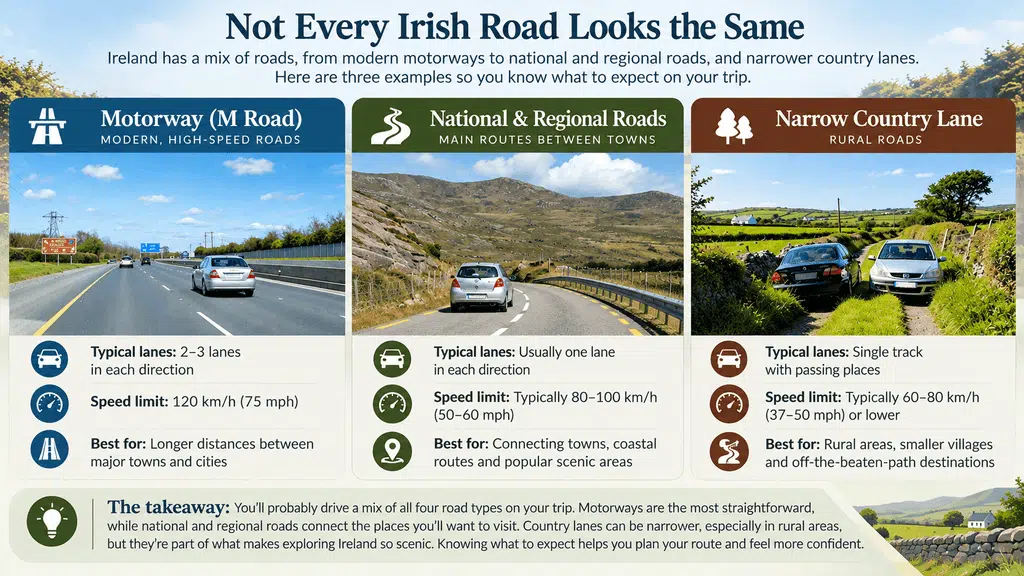
First, Let Me Explain Ireland’s Road Types
You’ve probably driven on everything from interstates to small county roads in the US. Ireland has a similar range of driving experiences, although the road classifications aren’t exact equivalents.
| Irish road | Familiar US reference | What to expect |
|---|---|---|
| Motorway (M) | Interstate/freeway | Divided, high-speed route |
| National (N) | Major US/state highway | Main route; layout varies |
| Regional (R) | State/county connecting road | Town connections; width varies |
| Local (L) | Local/rural county road | Ordinary streets to narrow lanes |
Approximate comparisons, not identical classifications.
National and regional roads are separate classifications, even though they can sometimes look similar to a visitor. And motorways are technically part of Ireland’s national road network. Think of this table as a guide to what driving feels like, rather than a direct translation of the road-numbering systems.
The main point? You can plan much of a trip on familiar-feeling main roads. Those tiny lanes with grass down the middle are real, but they’re not the whole picture. If you’re choosing between a compact rental and something larger, it’s worth comparing the available car sizes on Discover Cars before you commit. That’s worth remembering when you’re driving in Ireland for the first time.
🚨 DON’T SKIP INSURANCE: I can’t stress this enough, but travel insurance is an absolute must! Thankfully, VisitorCoverage is a great tool when comparing affordable plan options.
Driving in Ireland vs the US: The Practical Differences
Now that you have a sense of the roads, let’s look at the differences that actually affect how you drive. Some are immediate adjustments. Others are worth knowing in advance so they don’t catch you off guard.
| Difference | USA | Ireland |
|---|---|---|
| Side of road | Right | Left |
| Speed units | mph | km/h in the Republic; mph in Northern Ireland |
| Turning on red | Sometimes permitted, subject to local rules | No general permission |
| Overtaking | Usually left | Usually right |
| Rental transmission | Automatics common | Manual cars common; reserve automatic if needed |
| Tolls | Plazas and electronic charging | Plazas and electronic M50 toll |
Many principles remain familiar, despite different roads and rules.
The most noticeable difference is the side of the road. You’ll generally sit on the right-hand side of an Irish rental car too, so you’re positioned towards the centre of the road just as you are when driving at home.
You don’t need to memorise everything here. We’ll cover the changes that need a little more explanation, particularly signs, roundabouts and renting a car.
PLANNING ON RENTING A CAR IN IRELAND?
I highly recommend keeping an eye on the rental prices ahead of time by using comparison tools like Discover Cars to find the best prices on the market.
Driving Words You’ll Hear in Ireland
Some things sound different here even though the idea is familiar. It’s useful to know a few of these before collecting a rental car or asking for directions.
| Meaning | USA | Ireland |
|---|---|---|
| Fuel | Gasoline | Petrol |
| Fuel stop | Gas station | Petrol station |
| Circular junction | Traffic circle / roundabout | Roundabout |
| Priority sign | Yield | Give way |
| Signalling | Turn signal | Indicator |
| Parking | Parking lot | Car park |
| Luggage space | Trunk | Boot |
| Engine cover | Hood | Bonnet |
| Front glass | Windshield | Windscreen |
| Transmission | Stick shift | Manual |
| Road edge | Shoulder | Hard shoulder |
Different wording, often the same idea.
You don’t have to learn a new language to drive here. But knowing that the ‘boot’ is the trunk, for example, makes rental instructions and everyday conversations a little easier.
NEED A LAST-MINUTE PACKING FIX?
You’d be surprised how many visitors regret not packing waterproof trousers (like these) or a universal travel adapter (like this). That’s why I created this Amazon essentials list for those last-minute packing needs.
Driving in Ireland: Watch my practical video guide
If you’d prefer to see what driving in Ireland is really like, my general driving video walks you through practical tips for navigating Irish roads. It’s useful whether you’re visiting from America or elsewhere.
Road Signs in Ireland vs the US
Whether you’re driving in the Republic of Ireland or Northern Ireland, plenty of signs will look familiar. The red, eight-sided STOP sign is one example, and traffic lights work in much the same way as you’re used to.
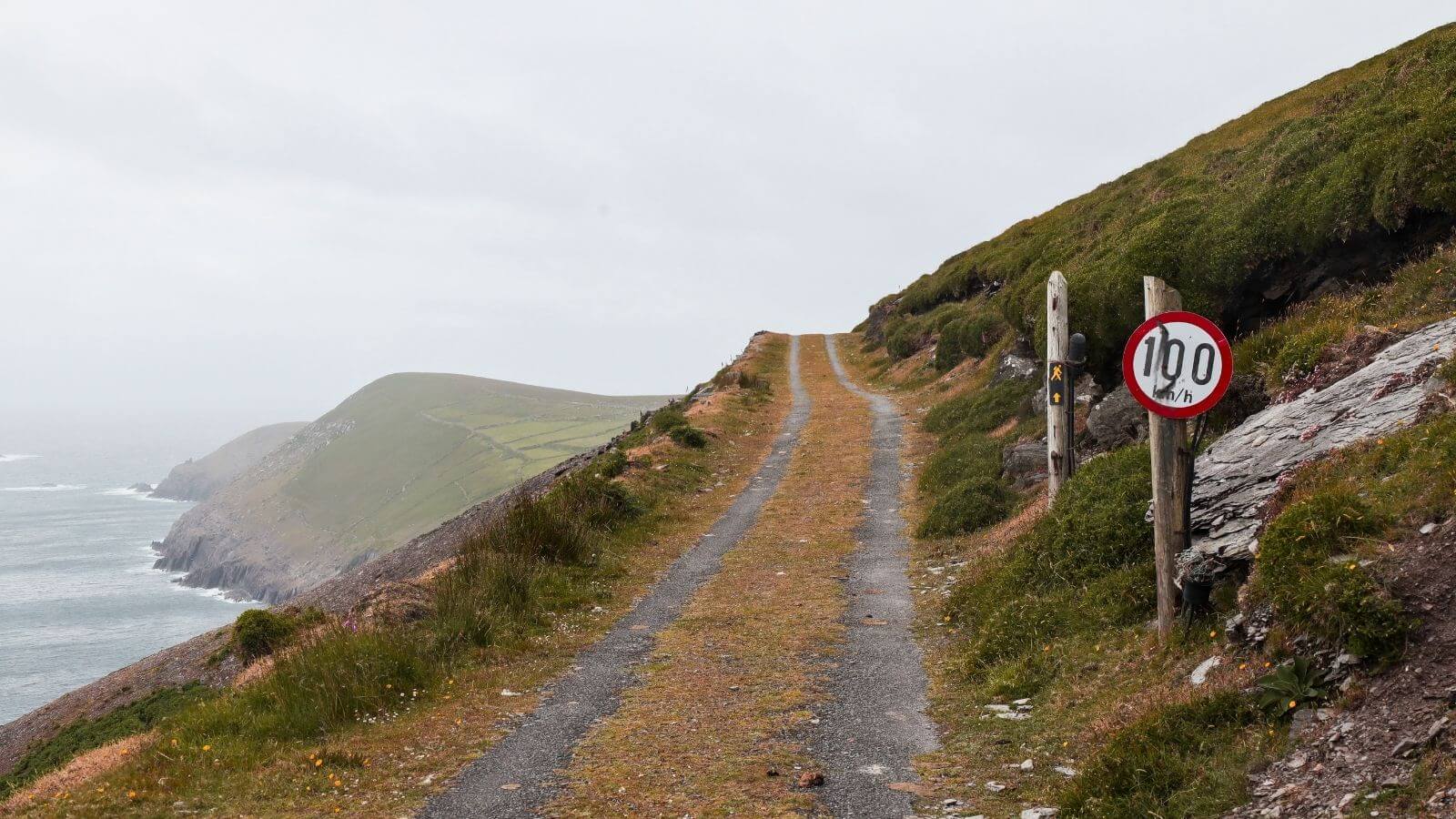
Speed-limit signs are one of the differences worth knowing. Both parts of Ireland use circular signs with a red border, rather than the rectangular signs you’re used to in the US. But there’s an important distinction: the Republic of Ireland uses kilometres per hour (km/h), while Northern Ireland uses miles per hour (mph), just like the US. So the numbers on the signs will change if you cross the border.
| 🇮🇪 Republic: km/h | 🇺🇸 Approx. mph |
|---|---|
| 30 | 19 |
| 50 | 31 |
| 60 | 37 |
| 80 | 50 |
| 100 | 62 |
| 120 | 75 |
These conversions apply to the Republic of Ireland. Northern Ireland uses mph. Always follow the posted limit and drive for the conditions.
The conversion table is handy for understanding speeds in the Republic. If your trip includes Northern Ireland, remember that its posted limits are already in mph. Check both units on your rental car’s speedometer, particularly when crossing the border. In the Republic, the default limit on many rural local roads changed to 60 km/h in February 2025. Wherever you’re driving, follow the posted signs and slow down when conditions require it.
You’ll also see signs telling you to yield to other traffic. In the Republic, they commonly say YIELD or GÉILL SLÍ (Irish for Give Way), while in Northern Ireland you’ll typically see GIVE WAY. The principle will be familiar from the US. We’ll cover roundabout-specific guidance in the next section.

Roundabouts: A Familiar Idea You’ll See More Often
If you’re used to big traffic-light-controlled junctions in the US, you may be surprised by how often you encounter a roundabout in Ireland. You might know them as traffic circles. They exist in the US too, but they’re much more common on everyday Irish routes.
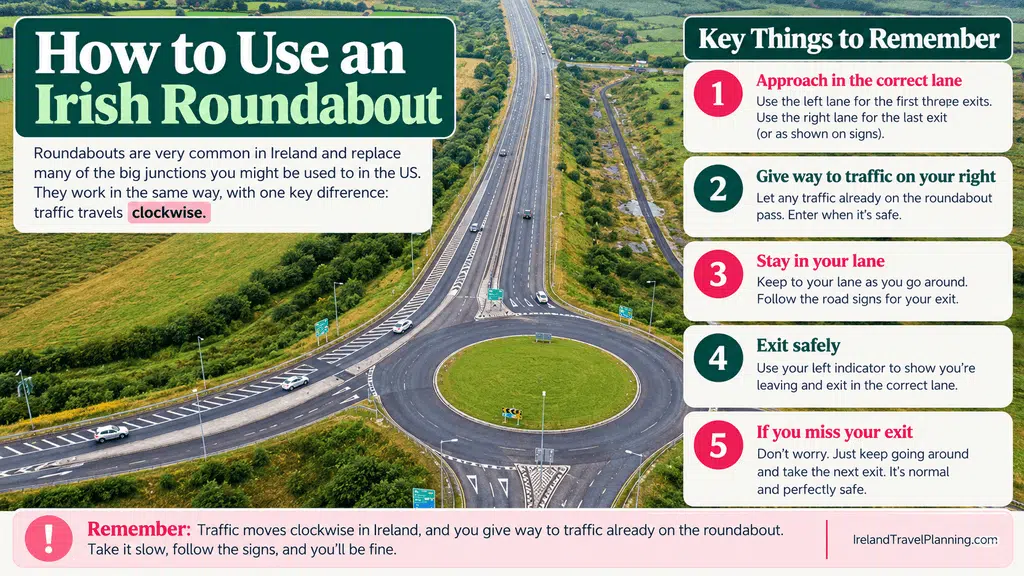
Traffic flows clockwise around an Irish roundabout. You generally give way to vehicles approaching from your right that are already circulating.
Here’s the quick version:
- Slow down and check the signs and road markings.
- Choose your lane for the exit you want, following the markings for that particular roundabout.
- Give way to traffic from your right before entering.
- Follow the roundabout clockwise, signalling as appropriate.
- Exit safely, checking the road ahead and other road users.
And if you miss your exit? Don’t cut across lanes in a panic. Continue safely, follow the markings and, where the layout allows, go around again. Otherwise let your navigation recalculate.
Some roundabouts have multiple lanes and specific lane directions, so follow the actual signs rather than treating one simplified diagram as a rule for every layout. It’s one of the reasons to familiarise yourself with the rules of the road in Ireland before collecting your car.
If roundabouts, road signs and narrow country roads are the bits making you nervous, I’ve put together an Ireland Driving Toolkit with quick-reference cheat sheets and practical driving information you can look through before your trip.
Pack for Ireland
Never Wonder “Did I Forget Something?”
A printable Ireland packing guide created by a local, so you know exactly what to bring for Ireland.
✔ Complete packing checklist
✔ Seasonal additions
✔ Hiking & road trip essentials
✔ Local recommendations
Narrow Country Roads: What Happens If You Meet Another Car?
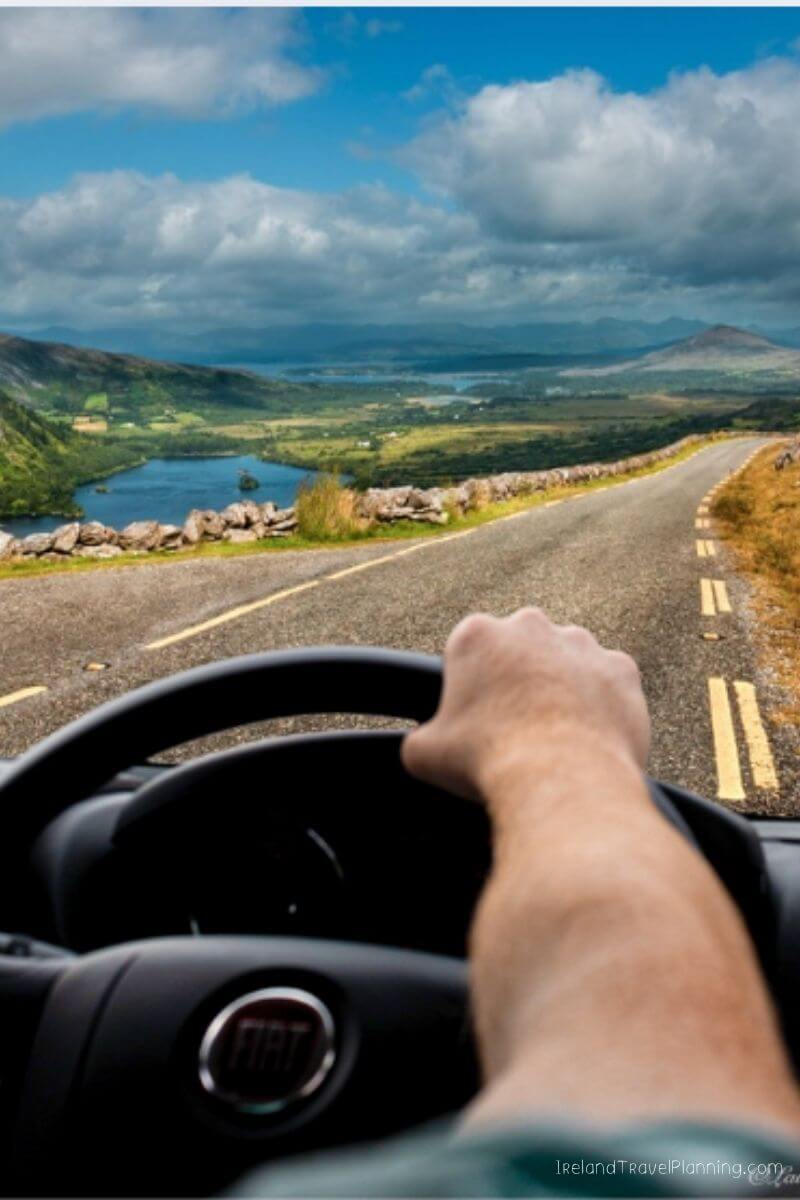
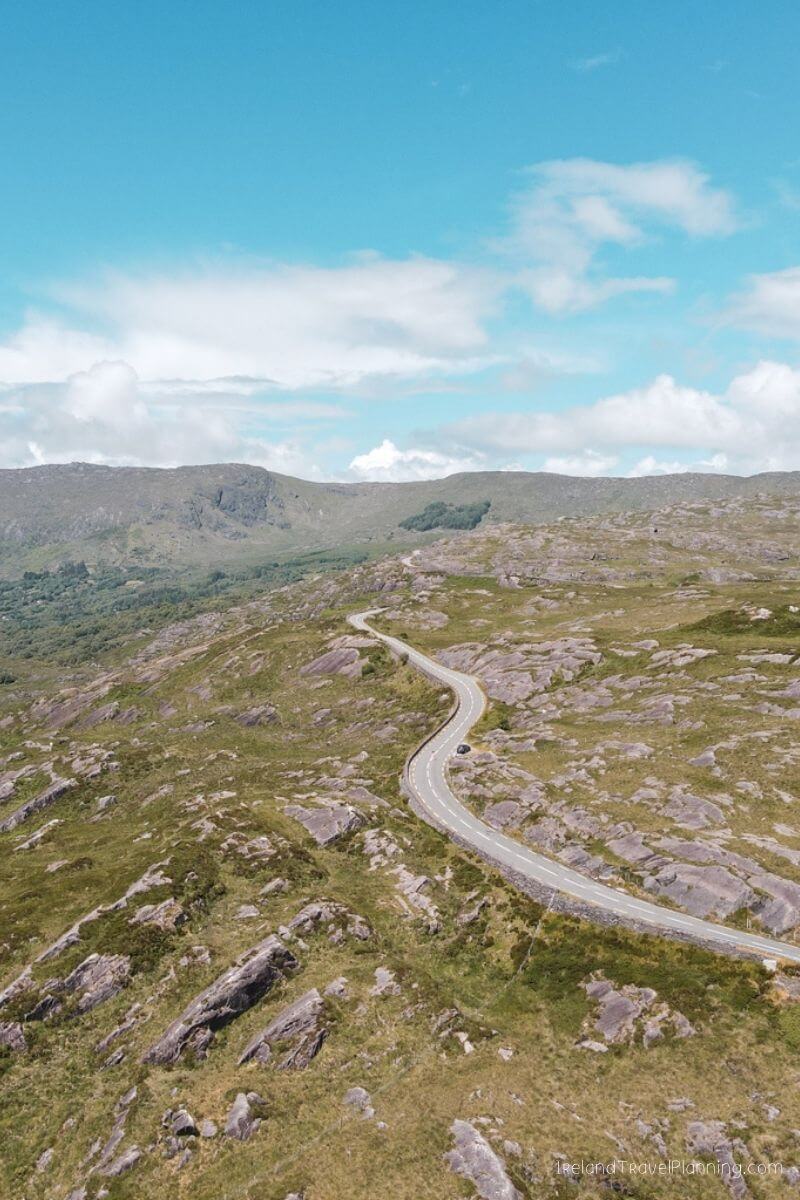
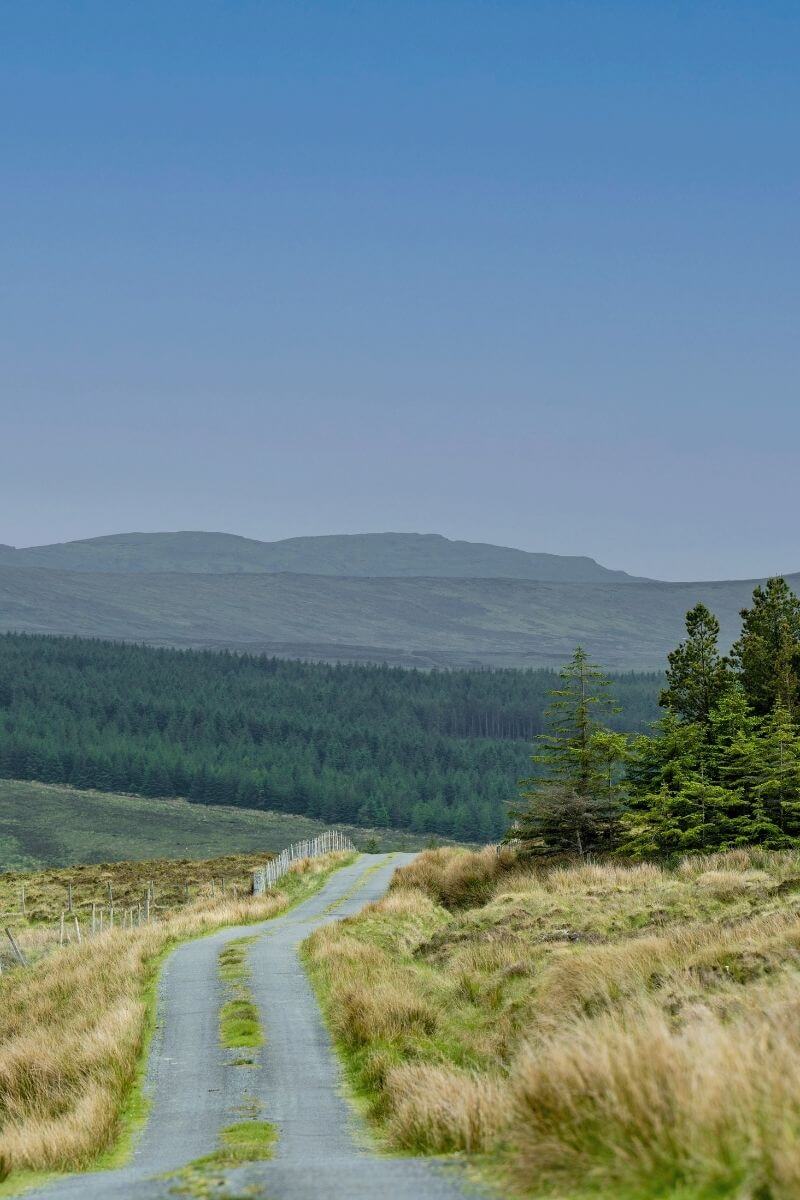
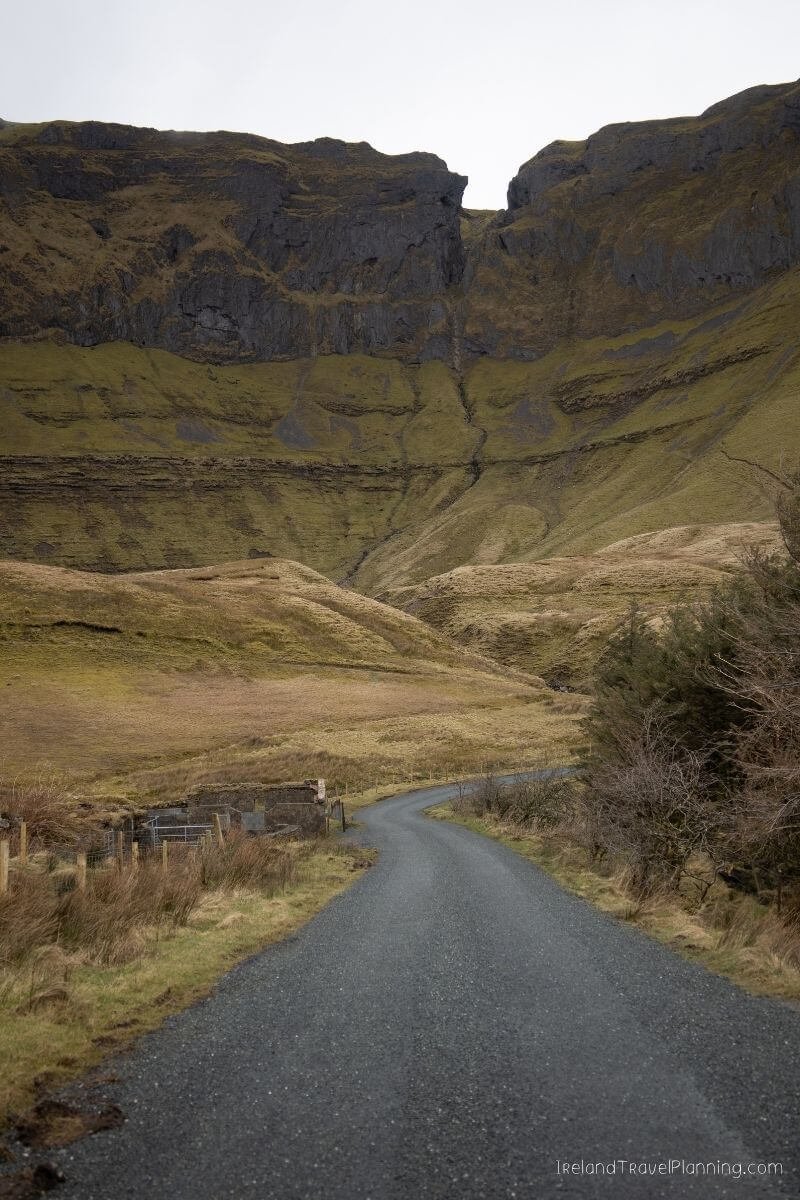
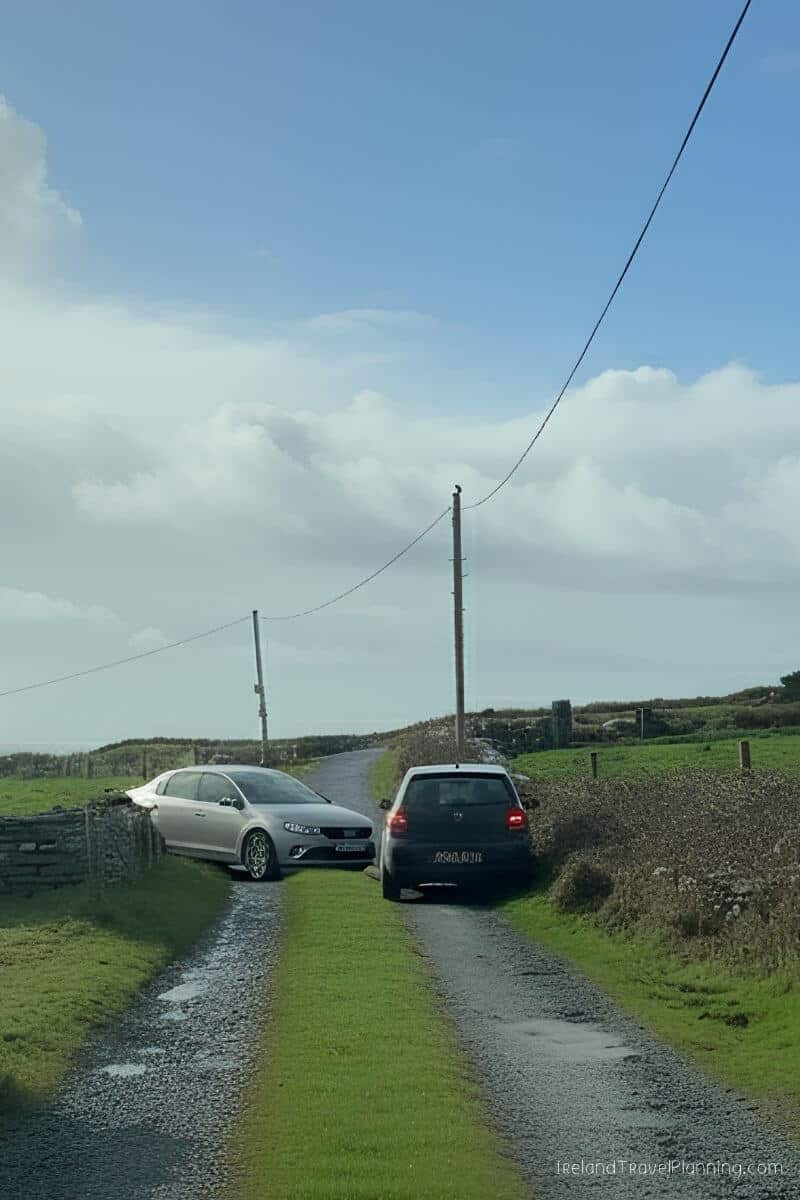
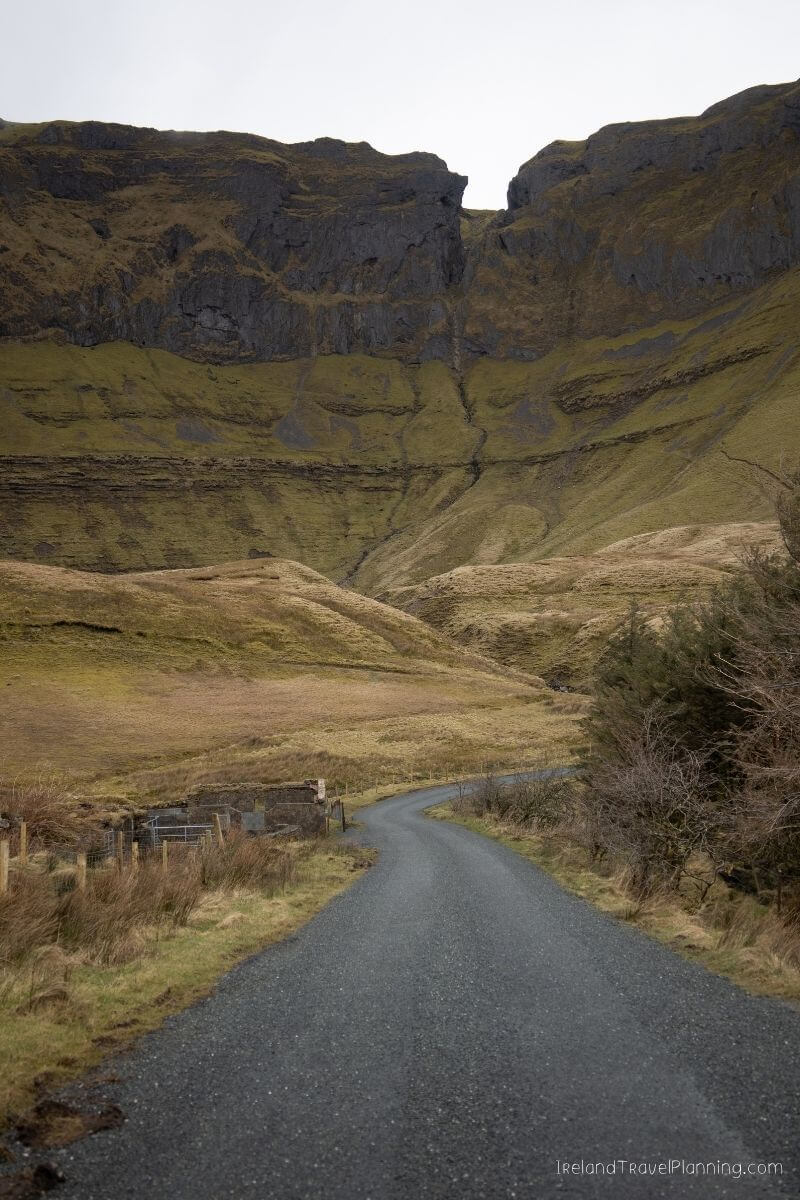
Those small lanes you see on social media do exist, particularly in rural and scenic areas. You might meet an approaching car on a stretch that seems barely wide enough for one.
The usual solution is to slow down and use a wider section or passing place so the vehicles can pass safely. Sometimes one driver needs to wait or reverse to a safe spot. Never reverse blindly around a bend or put yourself in danger to get out of someone else’s way.
And if a driver behind you is getting impatient, remember that their bad mood isn’t your responsibility. Let them past when there’s a safe opportunity, but don’t drive faster than the conditions allow just because someone is in a hurry.
One of my favourite planning tricks is checking unfamiliar stretches on Google Street View. It can give you a feel for whether a route uses major roads or narrow lanes before you arrive.
You may also meet tractors or animals. A cow once tried to eat the windscreen wiper on my car, which made for quite the conversation with a mechanic. Rural roads occasionally have their own ideas about your itinerary.
Drive in Ireland
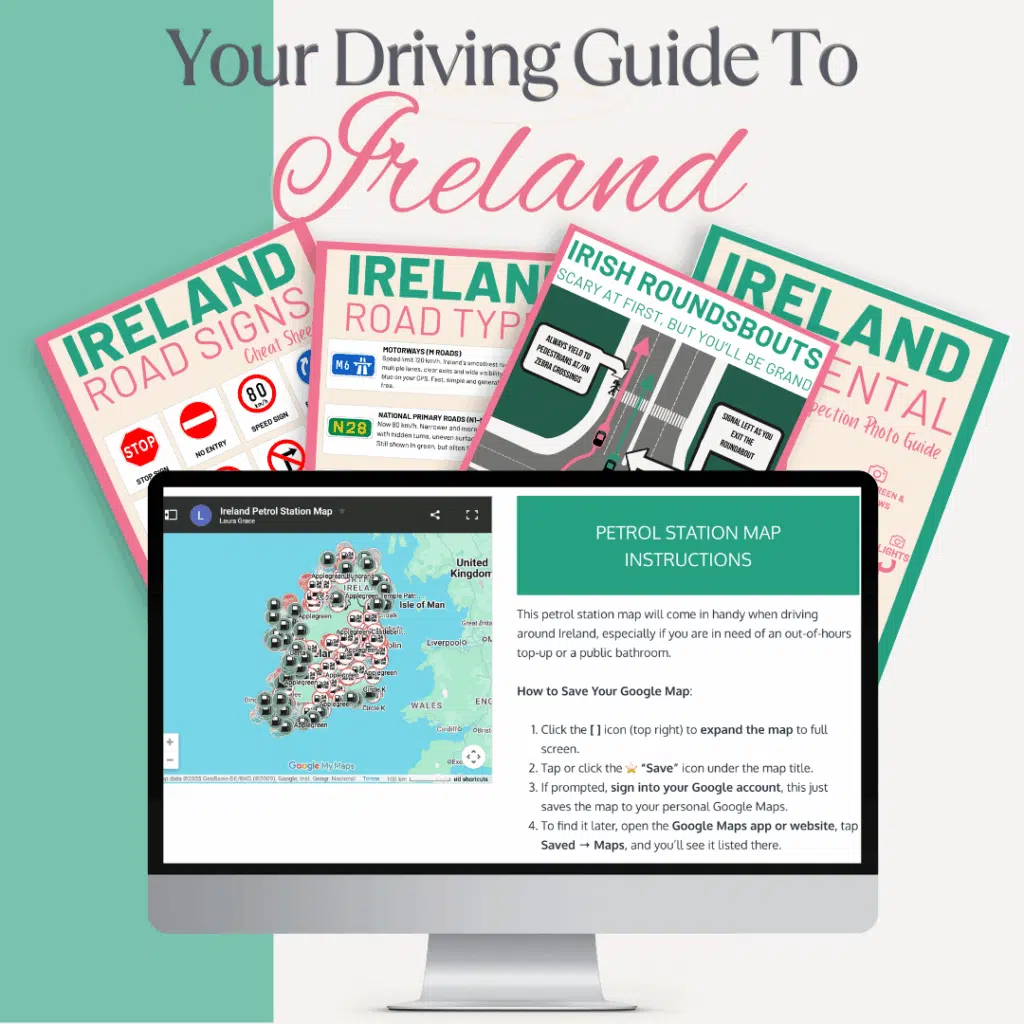
Feeling nervous about driving in Ireland? You’re not the only one… and you don’t have to figure it out alone.
The Ireland Driving Toolkit is a practical guide with clear local advice and no guesswork.
✔️ Custom Google Maps with petrol stations and toll roads mapped out.
✔️ Cheat sheets for roundabouts, road signs and km to miles.
✔️ Straightforward tips on tolls, navigation and what to expect on different road types.
Plus, the small local details most guides skip, but make all the difference once you’re here.
❌ AVOID EXPENSIVE ROAMING CHARGES: An affordable eSIM plan is the perfect solution! Airalo eSIMs work seamlessly across Ireland with their quick, easy and affordable plans use the code IRELAND10 for 10% off. (ROI Deals & ROI & NI Plans)
Renting a Car in Ireland as an American
The questions I see visitors worrying about most are the transmission, the size of the car, insurance and what documents they’ll need. They’re all worth sorting out before you travel.
Automatic or manual? If you drive an automatic at home, book one specifically. Manuals are common in Ireland, and adjusting to driving on the left is enough without learning a different transmission.
What size? Smaller cars can be more comfortable on narrow roads, but don’t book something that can’t comfortably fit your passengers and luggage. It’s worth thinking about what to pack for Ireland before deciding how much boot space you’ll need.
Licence and insurance? Americans can generally drive during a temporary visit with a valid US licence, subject to the relevant rules. Check the rental provider’s documentation requirements, insurance cover, excess, additional-driver terms and any cross-border conditions before booking.
How far ahead? Book early enough to have a good choice of automatics. I use Discover Cars to compare rental companies, car sizes and prices in one place, but make sure you check the total cost and the individual provider’s rental conditions, not just the headline daily rate.
If you’re spending your first couple of days in Dublin, consider whether you actually need the car until you’re ready to leave the city. It may be easier to collect it after you’ve rested from the flight.
You’ll find more details about insurance and collection arrangements in my tips for renting a car in Ireland.
Your ticks are saved on this browser. They won’t sync to another device.
Already know your dates and where you’re collecting the car? You can compare rental cars and automatic options on Discover Cars before making a booking. Make sure you check the full price and the provider’s terms.
Petrol Stations, Tolls and Other Little Differences
Filling Up: Petrol Stations vs Gas Stations
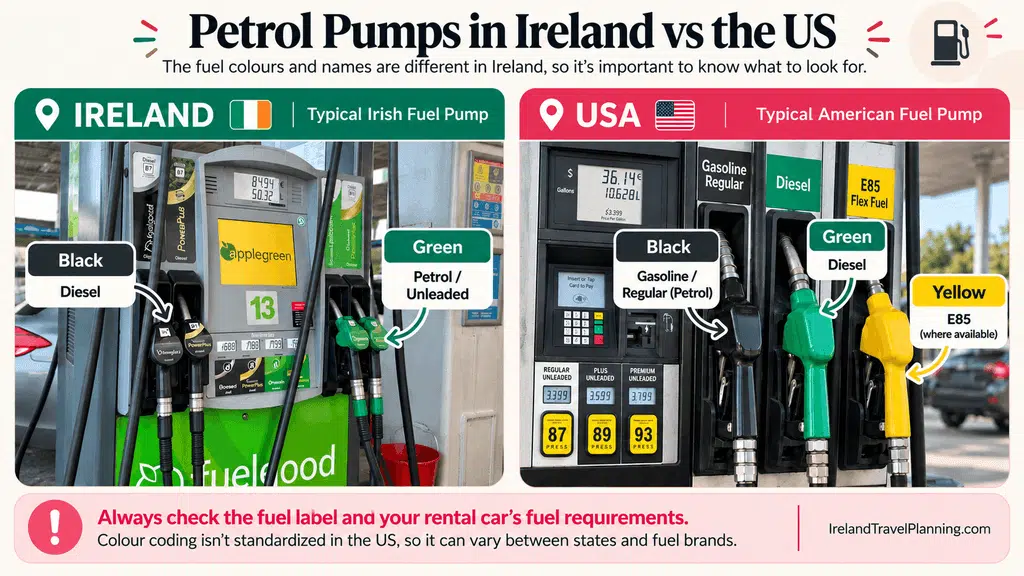
In Ireland, we say petrol, not gasoline. But the thing I most want Americans to notice is that the fuel-nozzle colours can be different from what they’re used to.
At many Irish pumps, green indicates unleaded petrol and black indicates diesel. In the US, a green nozzle often indicates diesel. The exact colours can vary, however, so never choose fuel by nozzle colour alone. Read the labels and check what your rental car actually takes.
At many Irish stations, you fill up first, note your pump number and pay at the counter afterwards. Pay-at-pump is available at some locations too. Larger service stations can be handy stops for coffee, deli food and a break along the way.
Toll Roads
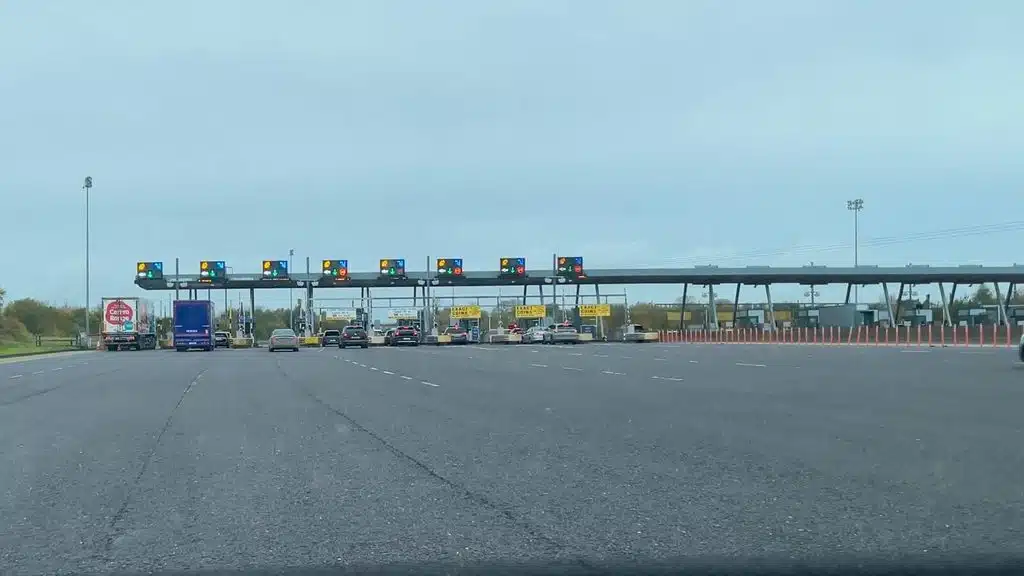
Toll plazas will feel familiar if you’ve used toll booths at home. The main exception to remember is the M50 around Dublin, which has a barrier-free electronic toll point.
Ask your rental provider how M50 tolls are paid. Some companies handle them automatically, while others leave you responsible. Where you’re responsible for an unregistered vehicle’s toll, payment is generally due by 8 pm the following day. See the official eFlow rental-car guidance.
Trying to remember the little details about tolls and petrol stations is a lot when you’re also getting used to driving on the left. My Ireland Driving Toolkit brings together quick-reference cheat sheets, toll information and custom maps, so you can check the practical bits without having to search for everything again when you’re on the road.
Avoid only visiting the same generic locations seen in every Ireland Travel guide…
Instead, spice up your itinerary with local hidden gems, lesser-known spots, and pull-ins that most drive past.
Sign up below for free access to my hand-picked Google Map Pins.
What Will Feel Familiar Once You’re Driving?
A lot more than you might expect. You already know how to judge traffic, give another car space and make safe decisions at junctions.
The road layout may be different, and you’ll need to pay particular attention when turning or pulling out after a stop. But this is still driving. You’re adapting skills you already have, not starting again from scratch.
I know that feeling from driving abroad myself. What seems strange in the first few minutes can become much more natural once you settle into it.
Your First Day Behind the Wheel
One of my biggest tips for driving in Ireland for the first time is to keep your first journey simple, especially if you’ve just come off an overnight flight. Set up your route before leaving the rental car park, and check whether your phone plan includes data in Ireland. If it doesn’t, Airalo’s Ireland eSIM plans are an option for mobile data in the Republic. If you’ll also be visiting Northern Ireland, use the Europe and UK plan options instead, and check the coverage details before buying. Use code IRELAND10 for 10% off.
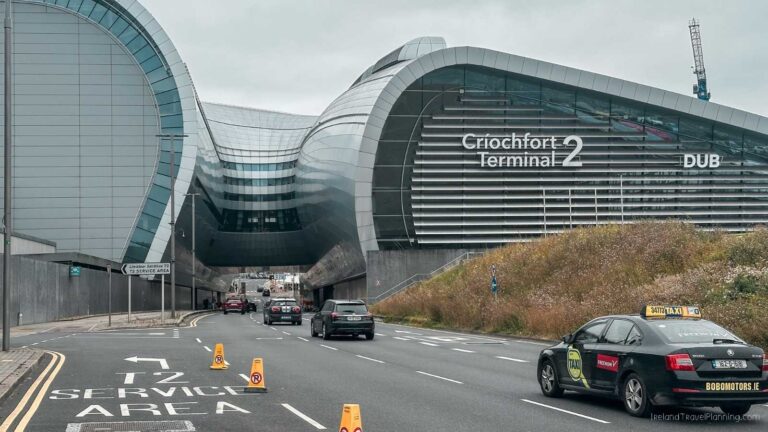
There’s no prize for heading straight from the airport onto a long rural drive while you’re exhausted. If you’re staying in Dublin first, you can get from Dublin Airport to the city centre and collect your rental car when you’re ready to head off.
Your ticks are saved on this browser. They won’t sync to another device.
What If You’re Driving Into Northern Ireland?
You’ll still drive on the left, but Northern Ireland is part of the UK, and speed limits are signed in miles per hour, not km/h. Other rules and signage can differ too.
If you’re taking a rental car across the border, check the company’s terms in advance for permission, cover and any additional charges.
A Quick Checklist to Save Before Your Trip
Your ticks are saved on this browser. They won’t sync to another device.
A Few Final Questions
Can Americans drive in Ireland with a US licence?
Generally, yes, for a temporary visit with a valid licence, subject to the applicable rules. Check the Road Safety Authority’s guidance for tourists and your rental company’s individual requirements.
Do I need an automatic rental car?
Not necessarily, but if you normally drive an automatic, I’d recommend booking one. There’s no need to add a manual gearbox to an already unfamiliar driving environment.
Will I have to drive on tiny country lanes?
That depends on your route. Main roads connect many of the places visitors want to see; some remote scenic stops involve narrower stretches. Check your route before you go rather than assuming every road will look like the ones on social media.

☘️ DISCOVER UNIQUE ACTIVITIES WHILE IN IRELAND: Check out GetYourGuide & Viator for unique things to do, like a DIY Claddagh Ring Workshop in Dublin or a street food walking tour with a local.
Final Thoughts
Driving in Ireland as a visitor from the US is different from driving at home, but different doesn’t automatically mean difficult. Once you recognise what feels familiar, understand the main changes and know what to expect on your route, it can feel much less intimidating.
Give yourself time to adjust, take the roads at a safe pace and enjoy the freedom of exploring Ireland.
If you’re ready to sort out the car, compare rental options on Discover Cars for your dates, and check the insurance, fuel policy and collection details before you book.